Ushuluddin Faculty of UIN Jakarta and Universiti Malaya Strengthen Academic Collaboration through International Seminar on Nusantara Fiqh
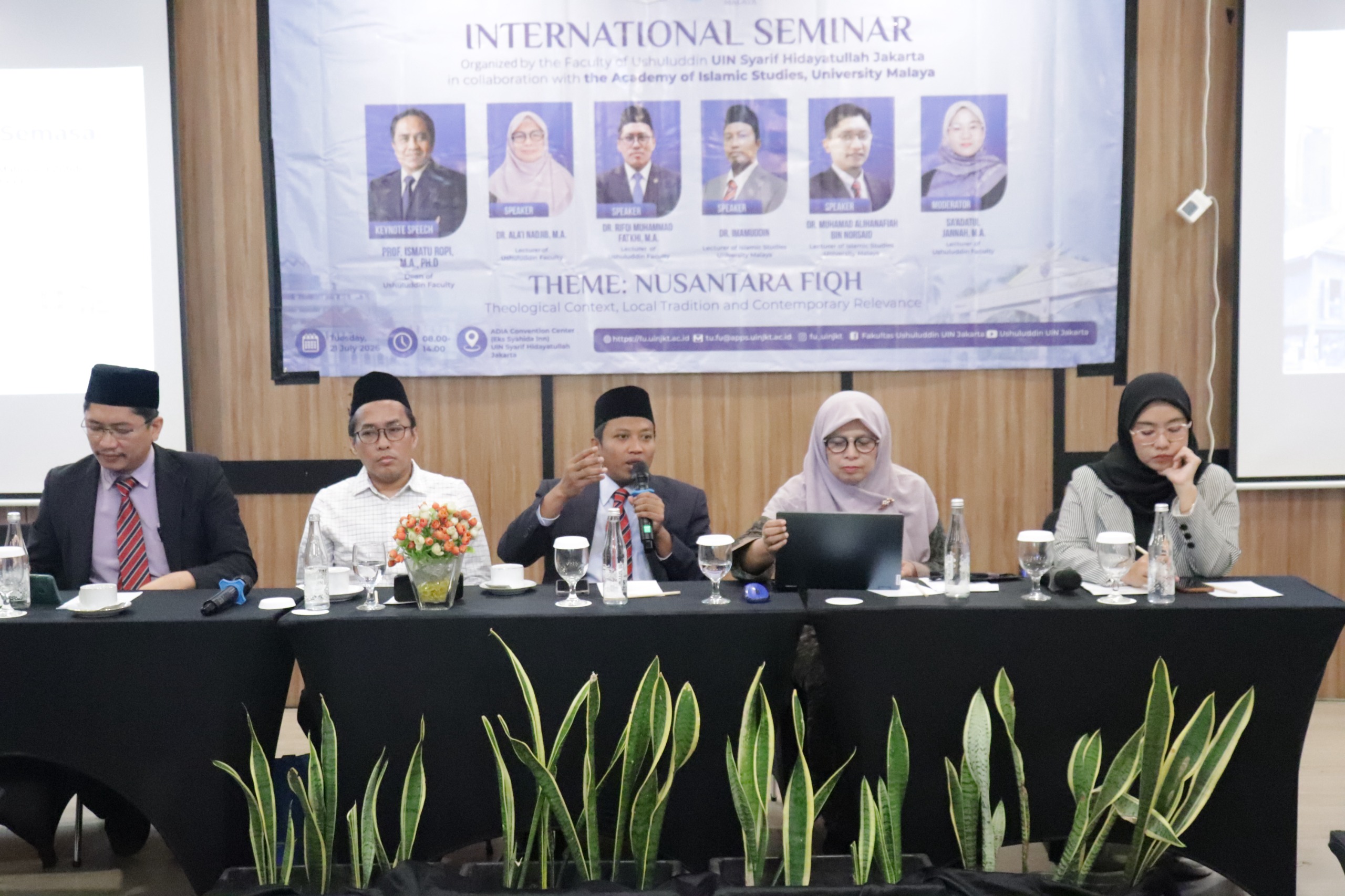
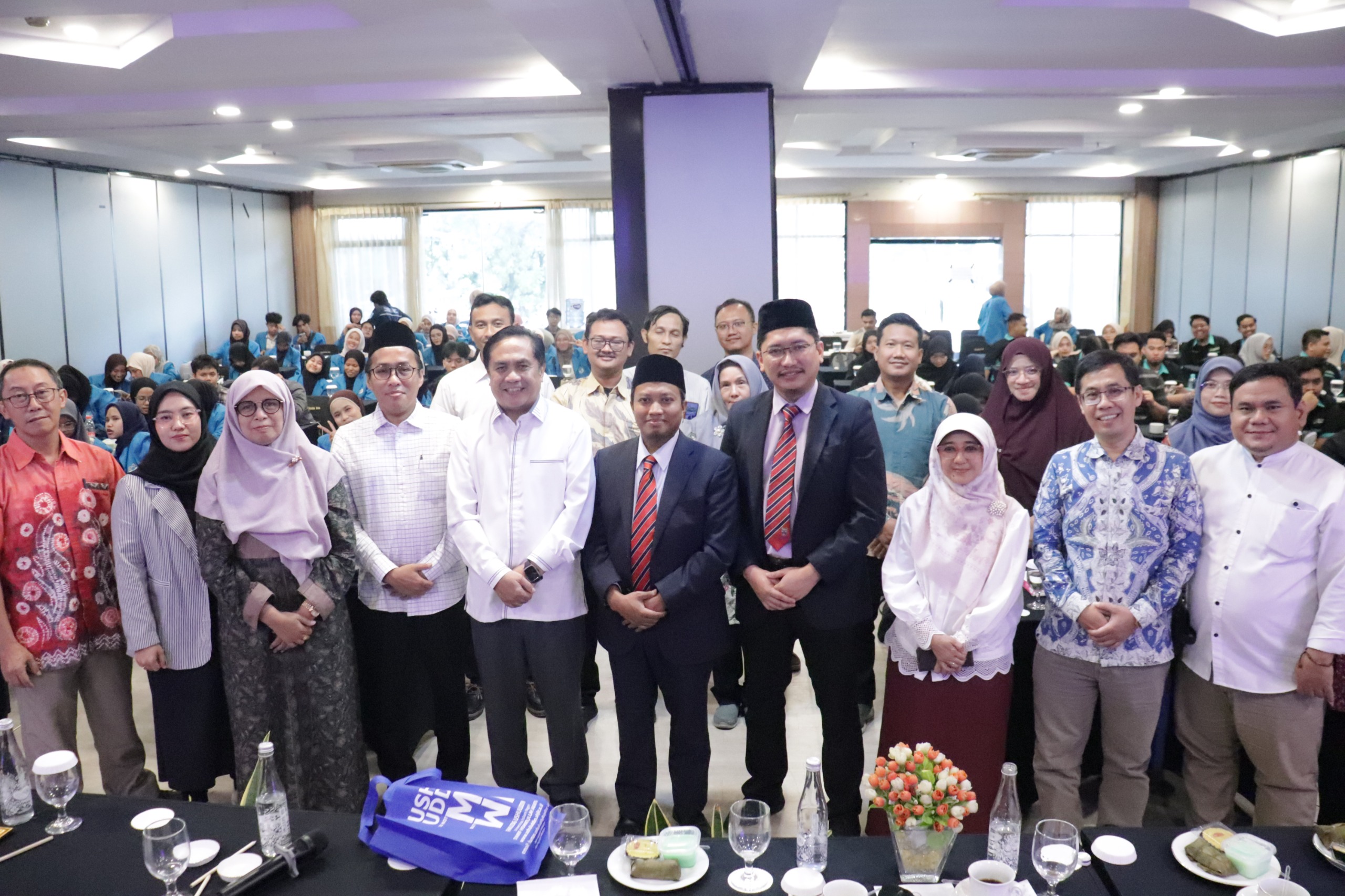
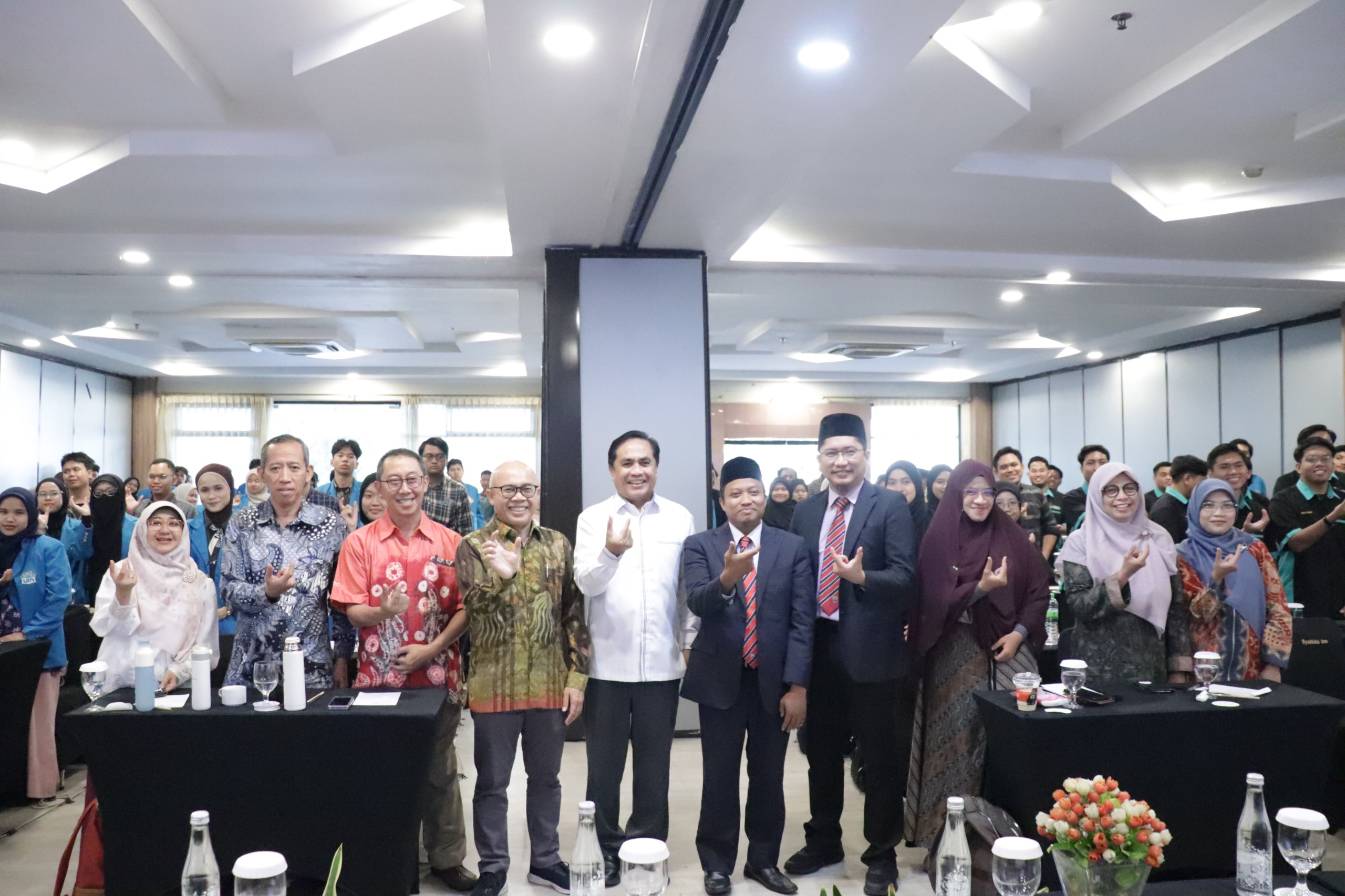
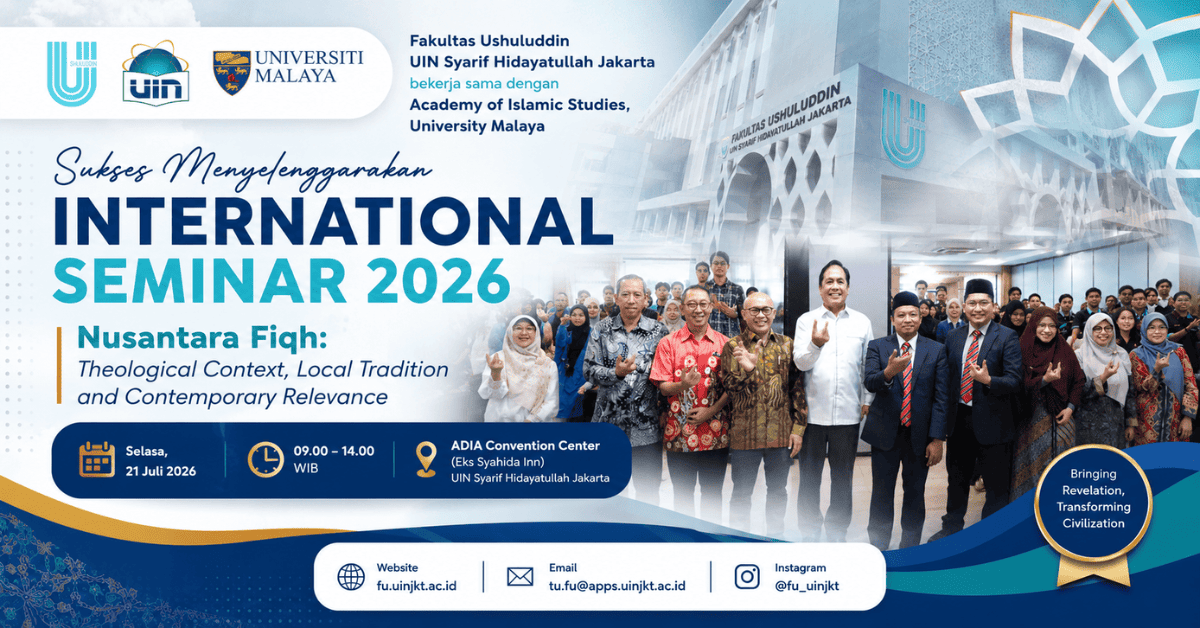
Jakarta, FU Online News – The Faculty of Ushuluddin, UIN Syarif Hidayatullah Jakarta, in collaboration with the Academy of Islamic Studies, Universiti Malaya, successfully organized the 2026 International Seminar entitled "Nusantara Fiqh: Theological Context, Local Tradition and Contemporary Relevance" on Tuesday (July 21, 2026) at the ADIA Convention Center (formerly Syahida Inn), UIN Syarif Hidayatullah Jakarta.
The international seminar brought together scholars from Indonesia and Malaysia to explore the development of Nusantara Fiqh from theological, socio-cultural, and contemporary perspectives. The event was attended by lecturers, researchers, students, and members of the academic community from both institutions as part of ongoing efforts to strengthen international academic collaboration and student mobility programs.
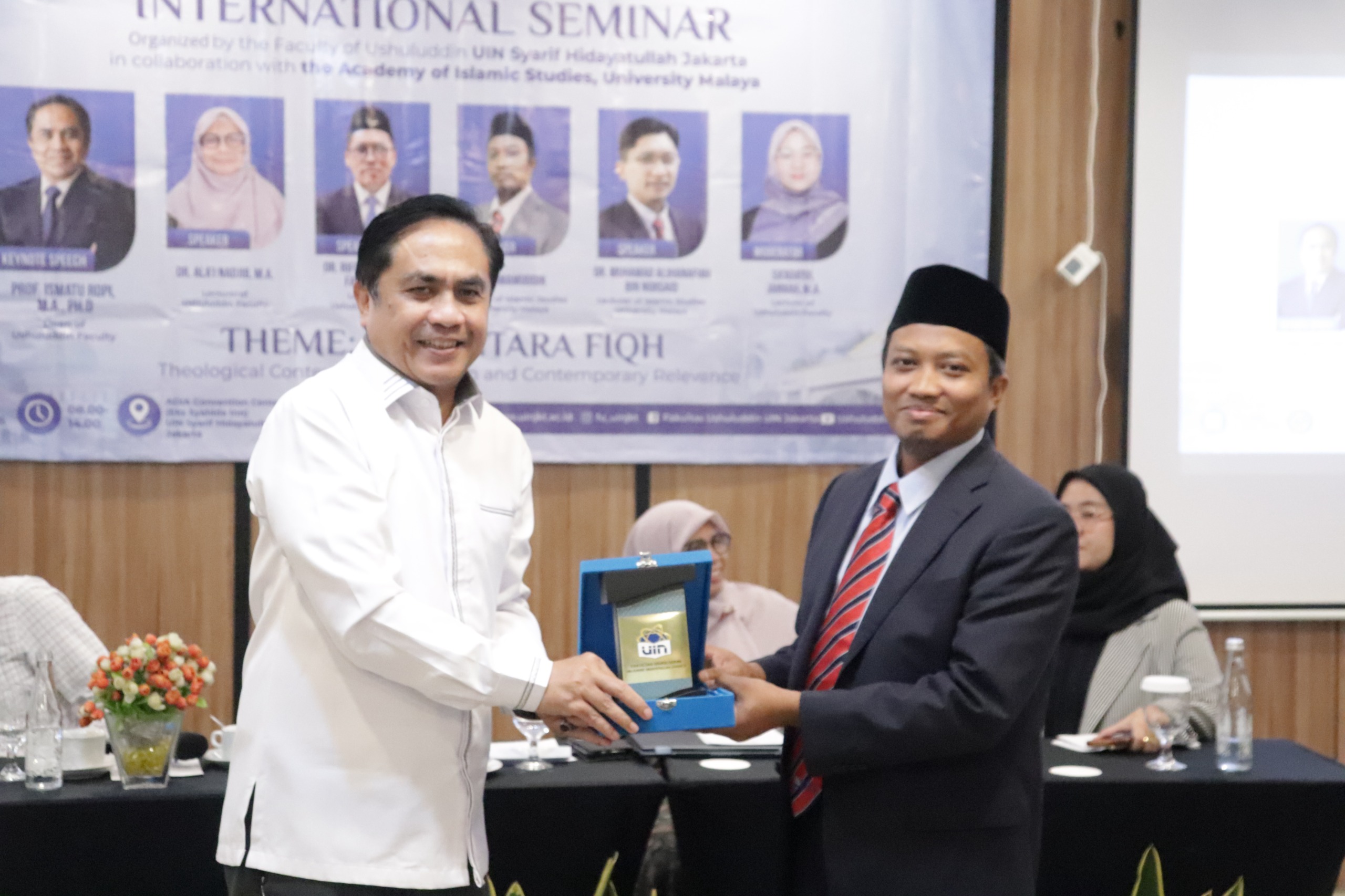
Representing Universiti Malaya, Dr. Imamuddin expressed his appreciation for the warm hospitality extended by the Faculty of Ushuluddin. He explained that the visit formed part of the university's student mobility program, which aims not only to foster stronger institutional ties but also to facilitate mutual learning on the development of Islamic thought in Southeast Asia.
"We are delighted to meet the leaders, lecturers, and students of the Faculty of Ushuluddin. Our visit is intended to deepen our understanding of Nusantara Fiqh while strengthening academic collaboration between Universiti Malaya and UIN Jakarta," he said.
Delivering the keynote address, the Dean of the Faculty of Ushuluddin, Prof. Ismatu Ropi, M.A., Ph.D., highlighted the Faculty's historical significance as the oldest faculty that laid the foundation for Islamic higher education in Indonesia. Celebrating its 69th anniversary this year, the Faculty continues to uphold an academic tradition that integrates classical Islamic texts with rational inquiry in addressing contemporary challenges.
"Islam in Indonesia and Malaysia shares many common characteristics. This provides a strong foundation for academic collaboration between our two countries. Religion must be capable of responding to the rapid changes brought about by technological advancement and the evolving realities of modern society," Prof. Ismatu Ropi remarked.
He further emphasized that the development of Islamic jurisprudence should continuously engage with social transformation. Universities, therefore, bear an important responsibility to produce moderate, contextual, and relevant Islamic scholarship capable of addressing the needs of contemporary Muslim societies.
Meanwhile, Prof. Din Wahid, M.A., Ph.D., stressed that the study of fiqh cannot be separated from the intellectual foundations of Ushuluddin. According to him, philosophy and critical reasoning are indispensable in understanding the evolution of Islamic jurisprudence.
"The foundations of fiqh lie within the disciplines of Ushuluddin. Therefore, fiqh must continue to be examined critically in order to respond effectively to newly emerging issues in society," he stated.
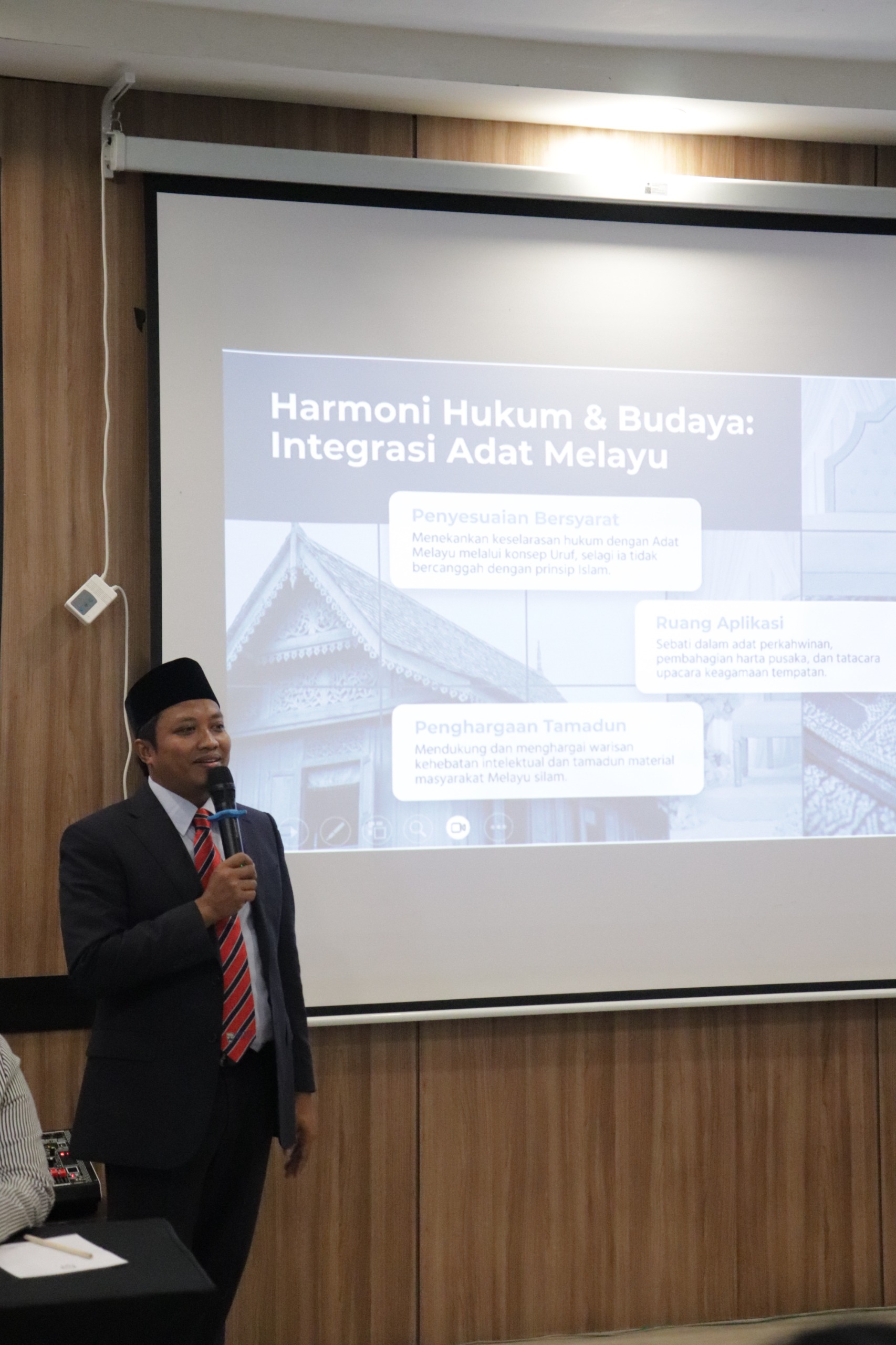
The seminar sessions commenced with a presentation by Dr. Imamuddin, entitled "Malaysian Fiqh: A Dynamic Framework." He explained that the development of fiqh in Malaysia is guided by three principal concepts: tajdid (renewal), wasatiyyah (moderation), and the active role of Muslim jurists (fuqaha). According to him, Islamic jurisprudence must remain responsive to contemporary issues while remaining firmly grounded in the principles of maqasid al-shariah and fiqh al-awlawiyyat (the jurisprudence of priorities).
He further noted that although the Shafi'i school serves as Malaysia's primary legal reference, opinions from the Hanafi, Maliki, and Hanbali schools are also considered whenever appropriate. Unlike Indonesia, Islamic law in Malaysia functions within a formal legal framework regulated by state institutions, resulting in greater uniformity in the implementation of religious policies.
The second presentation was delivered by Dr. Ala'i Nadjib, M.A., under the title "Women's Fiqh in the Nusantara Tradition." He argued that Nusantara Fiqh should not be regarded as a new school of Islamic law, but rather as a contextual development of the classical fiqh tradition that responds to the social and cultural realities of the Malay-Indonesian world.
His presentation traced the historical evolution of women's fiqh in Indonesia, beginning with the contributions of early Muslim women scholars such as Fatimah al-Banjari and continuing through the reform of Indonesia's family law, which has gradually expanded women's participation in public life.
The third speaker, Dr. Rifqi Muhammad Fatkhi, M.A., presented a paper entitled "From Prophetic Authority to Local Normativity: Negotiating Hadith Authority in the Making of Nusantara Fiqh." He explained that the formation of Nusantara Fiqh involves a complex process of negotiation encompassing the authenticity of hadith, canonization, legal reasoning, institutional legitimacy, and social acceptance.
Using the example of tahlilan, he demonstrated how religious traditions gain legitimacy not merely through authentic textual evidence, but also through legal interpretation, institutional endorsement, and widespread acceptance within Muslim communities.
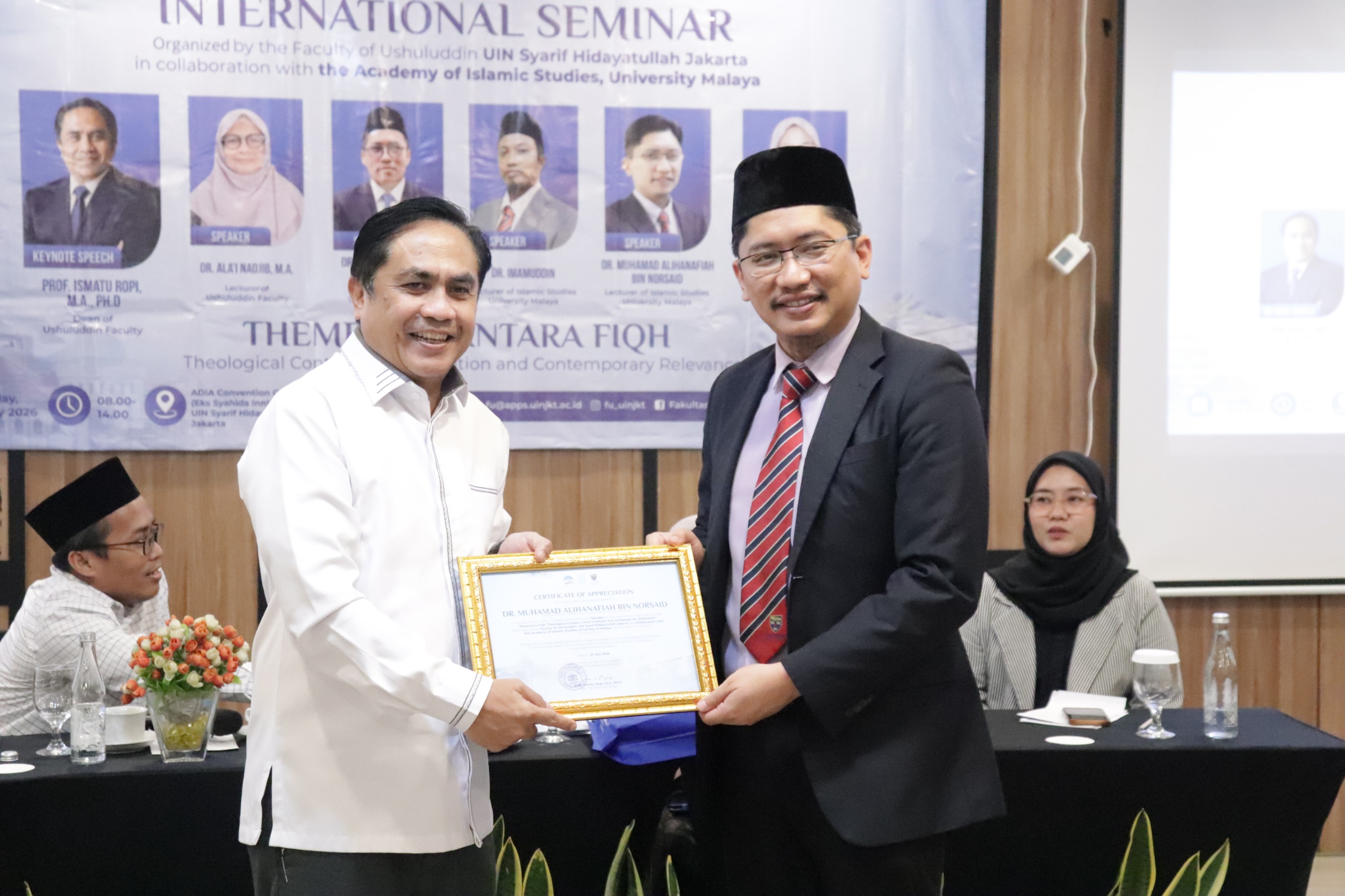
The final presentation was delivered by Dr. Muhamad Alihanafiah bin Norsaid, who discussed "The Discourse on Interfaith Marriage in Rational Qur'anic Exegesis and Its Influence in the Nusantara." He emphasized the importance of reading Qur'anic commentaries comprehensively in order to avoid misunderstandings regarding interfaith marriage.
According to him, rational exegesis (tafsir 'aqli) remains firmly rooted in the Qur'an and the classical principles of Qur'anic interpretation. Reason functions as an instrument for contextualizing the text rather than as an independent authority detached from the guidance of Islamic law.
The seminar concluded by reaffirming the shared commitment of the Faculty of Ushuluddin, UIN Syarif Hidayatullah Jakarta, and the Academy of Islamic Studies, Universiti Malaya, to strengthening academic cooperation in education, research, and scholarly exchange. Through initiatives such as this international seminar, both institutions aspire to advance the development of moderate, contextual, and globally relevant Islamic scholarship while contributing to the enrichment of contemporary Islamic thought across Southeast Asia and beyond.
(Ayu/PR FU)