
Reformulating the Hajj Ritual: From the Ceremonial to the Substantive
Thomas F. O’Dea, a sociologist, characterizes and interprets religion as the unifier of humanity’s most sublime aspirations; as a vast source of morality, social order, and inner peace; and as something that ennobles and civilizes human beings.
Every religion possesses both a ritual system and a value system, and Islam is no exception. Hajj is one of Islam’s ritual systems and constitutes one of its fundamental pillars. Performing Hajj without internalizing its values reduces it to a mere journey or touristic experience, leaving little meaningful impact on the pilgrim upon returning home.
It is therefore not surprising to find individuals who have performed Hajj yet continue to engage in corruption, make unjust decisions, or oppress others. Such behavior stems from a failure to appreciate and embody the values embedded within the rituals of Hajj.
Hajj is one of the five pillars of Islam. Allah says:
“And proclaim to the people the pilgrimage; they will come to you on foot and on every lean camel; they will come from every distant pass.”
(Qur’an 22:27)
In this verse, Allah commands humanity to undertake Hajj despite the hardships involved, whether traveling on foot or riding lean camels. The obligation of Hajj is intended to answer Allah’s call by commemorating a series of acts performed by Prophet Ibrahim (Abraham), the pioneer of Islamic monotheistic tradition, as reflected in Qur’an 14:37.
Ibrahim’s supplication was answered by Allah through His command that people visit the sacred place associated with him, as indicated in the verse above.
Every year, during the month of Dhu al-Hijjah, millions of Muslims travel to the Sacred House (Baytullah) in Makkah. They willingly undertake long journeys despite the considerable distance from their homelands and the differences in climate. They leave behind their families, relatives, occupations, and daily activities to respond to Allah’s call.
One of the most frequently recited prayers during Hajj is the Talbiyah:
“Here I am at Your service, O Allah, here I am. Here I am, You have no partner, here I am. Surely all praise, blessings, and dominion belong to You. You have no partner.”
This declaration resonates collectively under the scorching desert sun. Its recitation seems to cool the Arabian land itself while immersing pilgrims in the spiritual legacy of Ibrahim.
The growing enthusiasm of Muslims to perform Hajj each year statistically reflects an increasing level of prosperity that enables them to meet their daily needs and save for the pilgrimage. People adopt various methods to finance their journey, including disciplined monthly savings, Hajj savings groups, and investments in land, gold, agriculture, and other assets.
Indeed, Hajj quotas for several years ahead are already fully booked. Consequently, immediate departure is nearly impossible under the computerized registration system, which strictly follows the order of registration and payment of Hajj fees. Exceptions occur only in emergency situations when a registered pilgrim is unable to depart and the opportunity is transferred to the next person on the waiting list.
In On Being a Muslim, Farid Esack explains that Hajj represents an encounter with the roots of the Muslim community—genealogical, religious, and spiritual. It embodies a genealogical root because Adam and Eve are believed to have reunited on the Plain of Arafah after their separation from Paradise, symbolized by the monument atop Jabal Rahmah in Makkah. It represents a religious root because the Cave of Hira, where Prophet Muhammad first received revelation, marks the physical beginning of Islam as a religion. Finally, it embodies a spiritual root because the Ka‘bah symbolizes the presence of Allah.
Therefore, when the rituals of Hajj are performed according to Islamic teachings, a pilgrim formally attains the title of Hajj during the standing at Arafah (wuquf) on the ninth day of Dhu al-Hijjah. Yet more important than the title itself is the meaning of Hajj that should remain deeply embedded within the pilgrim after returning home. The aspiration to become a Hajj Mabrur (an accepted and blessed pilgrim) can only be realized through continued obedience to Allah’s commands and adherence to the guidance of the Qur’an and the Sunnah.
Hajj occupies a unique position among acts of worship because it combines both physical devotion (ibadah jasmaniyah) and financial sacrifice (ibadah maliyah). In this sense, Hajj encompasses the essence of all the pillars of Islam. Technically, Hajj means journeying to the Sacred House to perform prescribed acts such as circumambulation (tawaf) and standing at Arafah while in the state of ihram and with the intention of performing Hajj.
Among the symbols of Hajj that deserve deeper reflection are the Ka‘bah, ihram, sa‘i, and wuquf at Arafah.
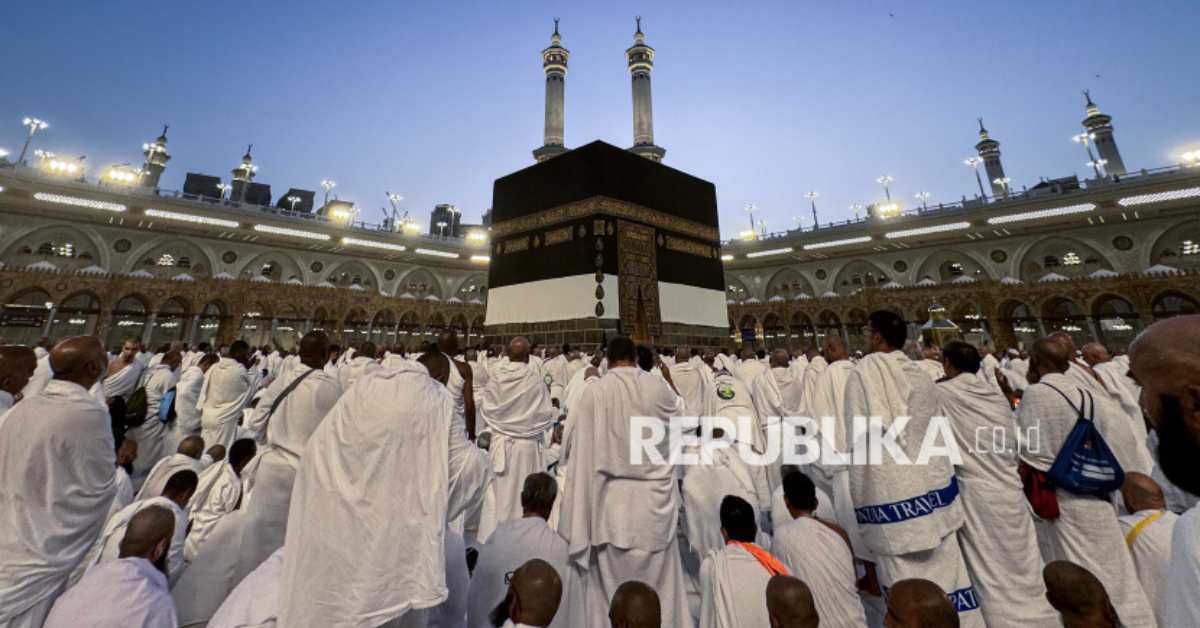
Ihram requires pilgrims to remove their ordinary clothing and wear simple white, unstitched garments. Removing ordinary clothes symbolizes the abandonment of social distinctions and the elimination of arrogance arising from social status. Wearing ihram signifies the equality of all human beings and serves as a psychological reminder that this is how every person will ultimately stand before God in death. It is therefore unsurprising that some scholars describe Hajj as a rehearsal for death.
What is the significance of the white color of the ihram garment? Pilgrims (hujjaj) are regarded as the guests of Allah (duyufullah). They visit the House of Allah dressed in white, a color symbolizing complete purity. Approaching Allah must therefore be grounded in purity of heart and sincerity of intention, free from any motive other than responding to His call.
While in the state of ihram, pilgrims are subject to strict regulations. They may not kill animals, cut or uproot plants, wear perfume, engage in sexual relations, commit acts of violence, or participate in quarrels and immoral behavior (la rafatha wa la fusuqa wa la jidala fil-hajj). These prohibitions essentially teach self-restraint, moderation in consumption, control of desires, and freedom from greed. The word ihram itself conveys the meanings of boundary, prohibition, and sacred restriction.
Another significant ritual is sa‘i, the brisk walk between the hills of Safa and Marwah. This ritual symbolizes the dynamics of life and relentless effort in the struggle for survival. It recalls Hajar’s desperate search for water when she and her infant son Isma‘il faced severe thirst. Rather than waiting passively for a miracle, she tirelessly moved between Safa and Marwah until she ultimately discovered the source of Zamzam.
Sa‘i is performed seven times, beginning at Safa and ending at Marwah. Safa symbolizes love and compassion toward others, while Marwah (derived from muruwwah) signifies the ideal of noble humanity. Thus, sa‘i teaches human beings to cultivate compassion and solidarity, thereby fostering an ideal and peaceful human society.
Another profound symbol is wuquf at Arafah. As noted by Ali Shariati, during the gathering at Arafah all people come together after setting aside their social attributes and status. Everyone is clothed in the same white garments, standing in the same place, united in worship of the One God. No distinctions remain; what emerges instead are shared humanity, brotherhood, solidarity, and heightened sensitivity toward others.
At Arafah, pilgrims are encouraged to spend the ninth day of Dhu al-Hijjah in prayer and supplication. The word Arafah is associated with knowledge and gnosis (ma‘rifah). The experience of standing at Arafah is therefore a moment of spiritual witnessing (mushahadah) and profound recognition of God, characterized by complete faith and intense divine love. In the language of Sufism, pilgrims may experience fana’—the dissolution of the self—so that they perceive nothing but the Beloved.
In such a state, pilgrims become detached from everything, even from themselves. Journeying to Arafah is, in essence, a journey toward intimate communion with Allah. It is there that a profound dialogue between the pilgrim and God is established, enabling the believer to discern and implement divine guidance in worldly life.
The profound meanings embedded within the rituals of Hajj demonstrate that they are far more than mere ceremonial acts. The pilgrimage instituted by Prophet Ibrahim and performed by millions of Muslims across generations is deeply connected to the social dimension of human life. In other words, a Hajj Mabrur is a pilgrimage that successfully harmonizes ritual devotion with social responsibility and ethical action.
By: Hasani Ahmad Said
Lecturer, Faculty of Ushuluddin, UIN Syarif Hidayatullah Jakarta
Image Source: ANTARA FOTO/Citro Atmoko
This article was originally published by Republika.co.id on May 17, 2026, under the title “Reformulating the Hajj Ritual: From the Ceremonial to the Substantive.” https://khazanah.republika.co.id/berita/tf5yu0393/reformulasi-ritual-haji-dari-seremonial-ke-substansial