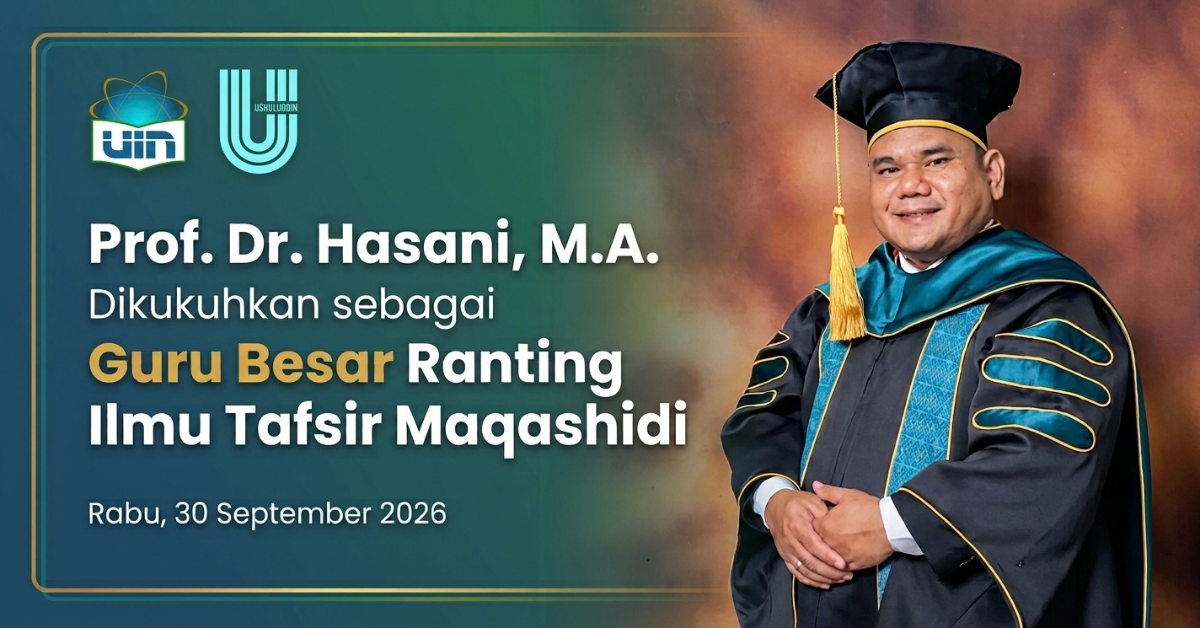
Prof. Hasani Inaugurated as Professor of Maqashidi Qur’anic Exegesis at UIN Jakarta
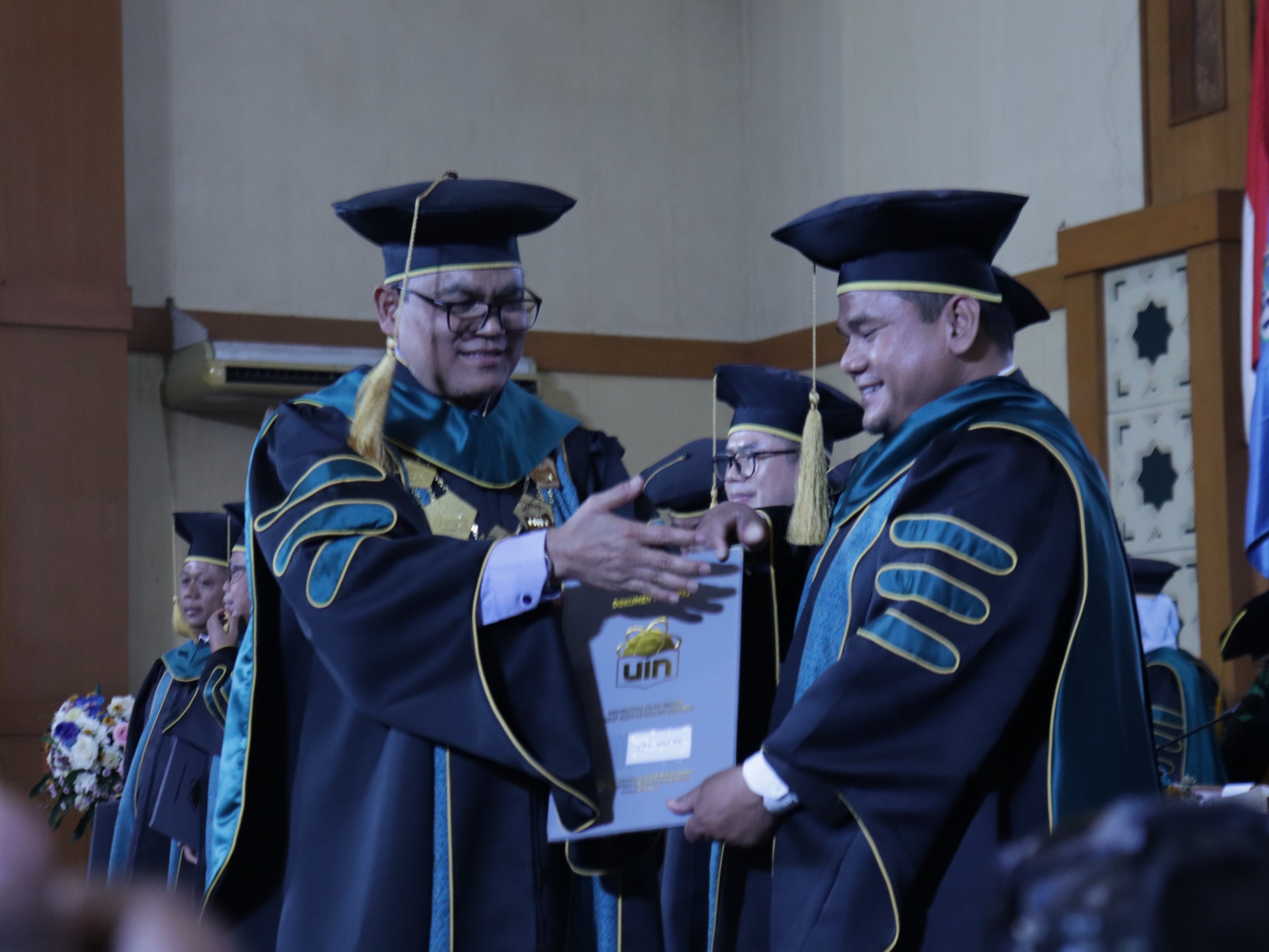
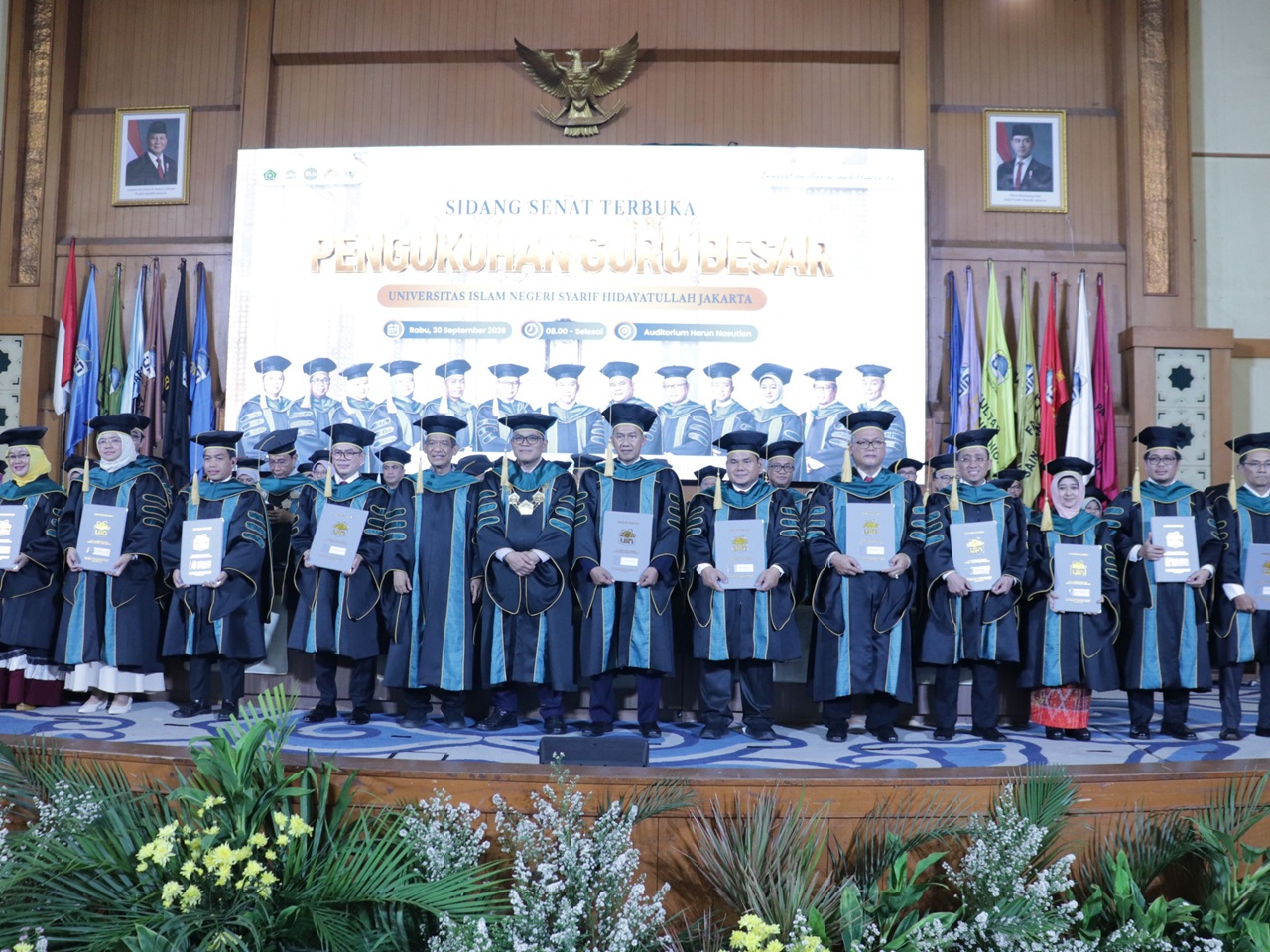
Jakarta, FU Online News — The Faculty of Ushuluddin at UIN Syarif Hidayatullah Jakarta marked another significant milestone in the development of Islamic scholarship with the inauguration of Prof. Dr. Hasani, M.A. as Professor in the field of Maqashidi Qur’anic Exegesis. The inauguration ceremony was held on Wednesday, September 30, 2026, at the Harun Nasution Auditorium, UIN Syarif Hidayatullah Jakarta, from 8:00 a.m. to 12:00 p.m. Western Indonesia Time (WIB).
The ceremony was part of the inauguration of 13 professors. The event was attended and addressed by the Minister of Religious Affairs of the Republic of Indonesia, as well as family members, academic colleagues, institutional partners, organizational representatives, and other invited guests.
Maqashidi Qur’anic Exegesis and Questions about the Purpose of Revelation
In his scientific oration entitled “Developing Maqashidi Qur’anic Exegesis in the Indonesian Context: Epistemological Construction and Scholarly Prospects in Islamic Higher Education,” Prof. Hasani elaborated on the importance of establishing an epistemological foundation for the development of Maqashidi Qur’anic Exegesis.
According to the ideas presented in his oration, Maqashidi Qur’anic Exegesis does not stop at asking what the Qur’an says. More fundamentally, it encourages us to ask: “Why does the Qur’an say this? What values are intended to be realized? And how can this guidance bring about human welfare and benefit?”
These questions provide a foundation for viewing the Qur’an not merely as a text to be read and understood, but also as a source of values to be actualized in human life.
Historically, maqashid thought has deep intellectual roots in the Islamic scholarly tradition. Prof. Hasani connected this tradition to the ideas of scholars including Al-Juwayni, Al-Ghazali, Al-Shatibi, and Ibn Ashur, who made important contributions to the development of thought concerning the purposes and welfare-oriented dimensions of Islamic law.
From Text to Contextualization and Transformation
In developing Maqashidi Qur’anic Exegesis, Prof. Hasani proposes a trajectory that moves from text, context, maqashid, contextualization, to transformation.
This trajectory demonstrates that the interpretive process does not end with understanding the text. It continues through examining context, identifying its objectives or maqashid, contextualizing its values, and ultimately transforming them into meaningful realities in human life.
In the Indonesian context, the epistemology of Maqashidi Qur’anic Exegesis needs to be developed in an integrative, interdisciplinary, contextual, and transformative manner. The Qur’an speaks to Indonesian realities with their diverse challenges, including issues of justice, fraternity, the environment, and knowledge.
Therefore, the questions that need to be continuously explored are: for what purpose was the guidance revealed, what human values does it seek to realize, and how can those values generate welfare and benefit within the context of Indonesian society?
Reconstructing the Epistemology of Maqashidi Qur’anic Exegesis
One of the key ideas presented in the scientific oration is the reconstruction of the epistemology of Maqashidi Qur’anic Exegesis through four elements: Nass, ‘Aql, Maqasid, and Waqi’.
Nass serves as the source of legitimacy, ‘Aql as the basis of argumentation, Maqasid as the orientation, and Waqi’, or reality, as the point of actualization. These four elements provide a relevant framework for developing Maqashidi Qur’anic Exegesis within Islamic higher education institutions.
This framework positions text, reason, objectives, and reality in a complementary relationship. Thus, the development of Qur’anic exegesis can remain grounded in primary Islamic sources while also critically and contextually engaging with changing realities.
Prospects of Maqashidi Qur’anic Exegesis in Islamic Higher Education
In the context of higher education, Prof. Hasani emphasized that students need competencies that go beyond mastery of a single discipline. The development of Maqashidi Qur’anic Exegesis requires the ability to bring together various fields of knowledge, including:
-
The Qur’an and society
-
Arabic language and anthropology
-
‘Ulum al-Qur’an and social sciences
-
Usul al-Fiqh and philosophy of science
-
Empirical data and spiritual sensitivity
According to the ideas presented in the oration, there are five major prospects for Maqashidi Qur’anic Exegesis in Islamic higher education: developing methods of Qur’anic exegesis, strengthening interdisciplinary research paradigms, responding to Indonesian social challenges, connecting Islamic studies with modern science, and providing an ethical foundation for digital civilization and the future of humanity.
Within this framework, faculties and Qur’anic Studies and Exegesis programs are expected to serve as intellectual laboratories where texts are read, contexts are examined, theories are tested, realities are researched, and solutions are formulated.
From Text to Civilization
The central idea proposed by Prof. Hasani can be summarized in a trajectory: Text → Knowledge → Awareness → Welfare → Civilization.
This trajectory emphasizes that engagement with the Qur’an should not stop at reading and understanding. The knowledge gained from the Qur’an is expected to cultivate awareness, generate human welfare, and ultimately contribute to the development of civilization.
In his reflection, Prof. Hasani metaphorically described the relationship between the Qur’an, exegesis, maqashid, Indonesia, and Islamic higher education: if the Qur’an is light, then exegesis is the human effort to receive that light; if maqashid is direction, then exegesis is the endeavor to discover that direction; and if Indonesia is the space of service, then Islamic higher education is one of the intellectual homes through which that light and direction can be brought into life.
Ultimately, the development of Maqashidi Qur’anic Exegesis is directed toward bringing Qur’anic values into human life. The Qur’an is not merely read, understood, or internalized, but brought into life as a mercy for humanity.
The inauguration of Prof. Dr. Hasani, M.A. as Professor in the field of Maqashidi Qur’anic Exegesis marks an important moment in strengthening the academic tradition of the Faculty of Ushuluddin, UIN Syarif Hidayatullah Jakarta. The presence and development of this field of scholarship are expected to further strengthen the ecosystem of education, research, and Qur’anic and exegesis studies capable of engaging with the realities of Indonesian society and developments in knowledge.
Congratulations to Prof. Dr. Hasani, M.A. on his inauguration as Professor in the field of Maqashidi Qur’anic Exegesis. May this academic achievement further expand his scholarly contributions to Qur’anic and exegesis studies, Islamic higher education, and the welfare of society and humanity.
(FU Public Relations)