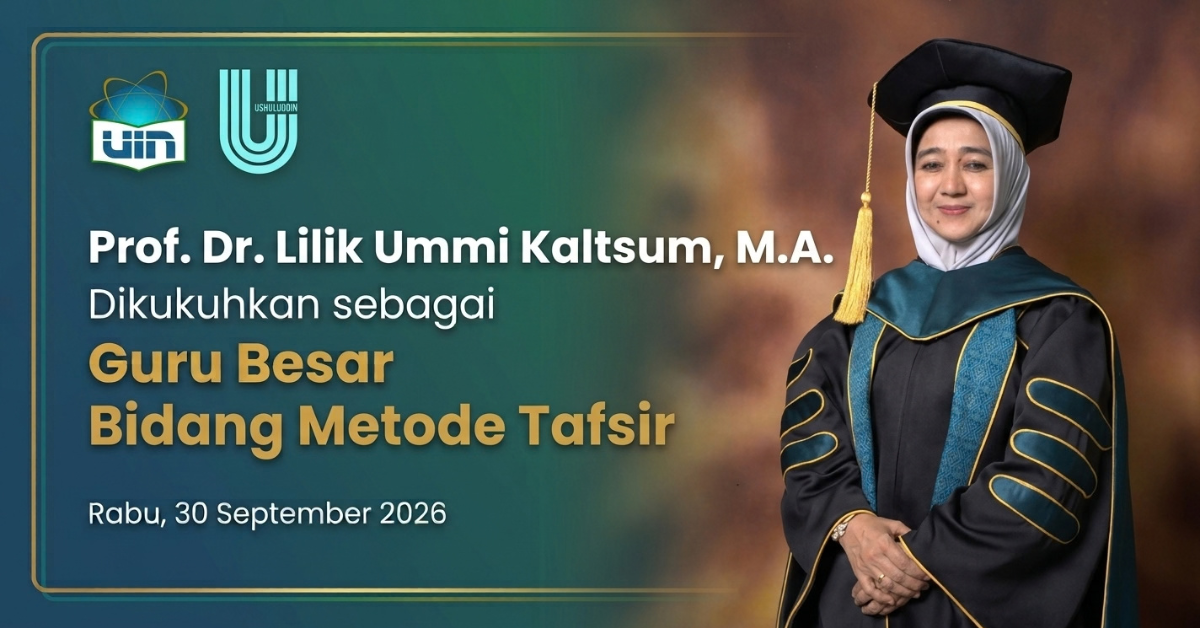
Prof. Dr. Lilik Ummi Kaltsum Inaugurated as Professor of Qur’anic Exegesis Methodology
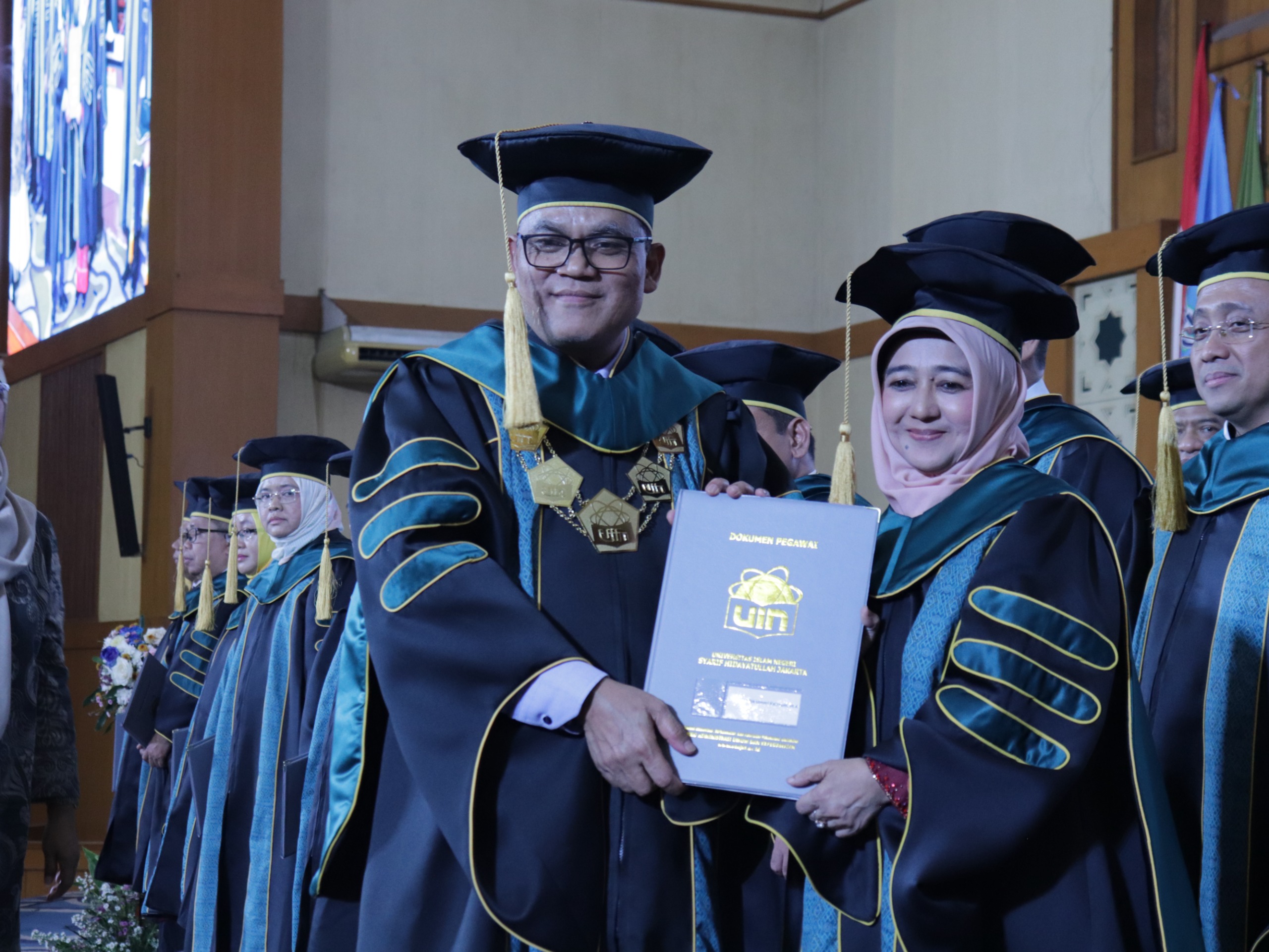
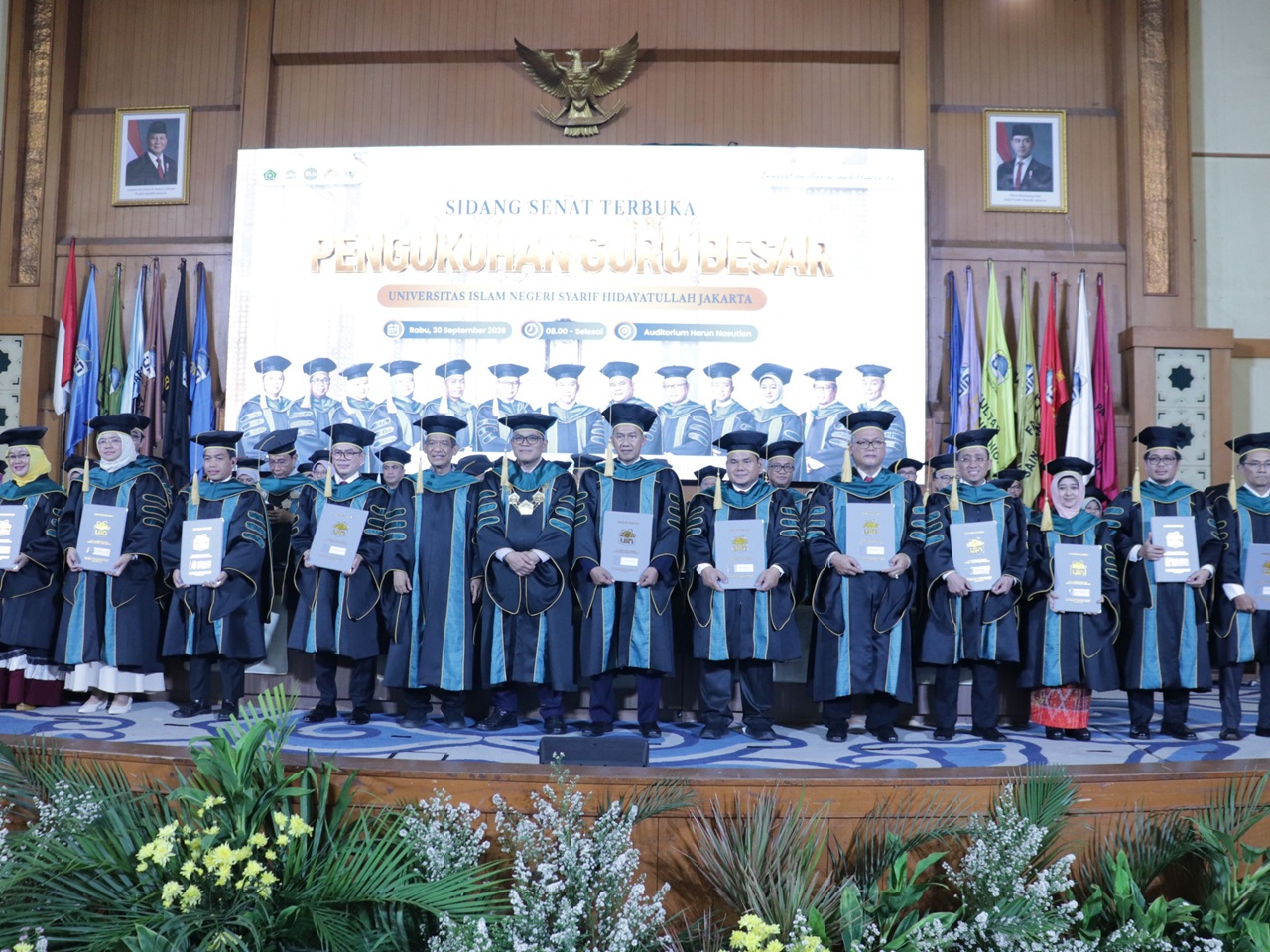
Jakarta, FU Online News — The Faculty of Ushuluddin at UIN Syarif Hidayatullah Jakarta marked another important milestone in the development of Qur’anic and exegesis studies with the inauguration of Prof. Dr. Lilik Ummi Kaltsum, M.A. as Professor in the field of Qur’anic Exegesis Methodology. The inauguration ceremony was held on Wednesday, September 30, 2026, at the Harun Nasution Auditorium, from 8:00 a.m. to 12:00 p.m. Western Indonesia Time (WIB).
The inauguration was part of a series of ceremonies honoring 13 newly inaugurated professors. The event was also attended and addressed by the Minister of Religious Affairs of the Republic of Indonesia, along with family members, academic colleagues, institutional partners, organizational representatives, and other invited guests.
On the occasion, Prof. Lilik delivered a scientific oration entitled “Tafsir Tawhidi Waqi'i: Integrating Text, Reality, and Tawhidic Consciousness in the Development of Qur’anic Exegesis Methodology.”
Text Remains Constant, Reality Continues to Change
In her scientific oration, Prof. Lilik began with three key concepts: text, reality, and Tawhidic consciousness. She argued that these three elements need to be integrated in the development of Qur’anic exegesis methodology.
The text remains constant, while reality continues to change. The Qur’anic text serves as the primary foundation of interpretation, while human realities continue to evolve and generate new challenges. Between the two, Tawhidic consciousness serves as a spiritual and ethical orientation in the interpretive process.
According to Prof. Lilik, these three elements need to be brought together because each has limitations when considered in isolation. An exclusive focus on the text may cause exegesis to become detached from real-life concerns. Conversely, an approach based solely on reality risks losing its textual grounding in the Qur’an. Meanwhile, prioritizing Tawhidic consciousness without an adequate textual methodology may turn interpretation into religious advice without sufficient methodological foundations.
Therefore, text, reality, and Tawhidic consciousness need to be integrated through a methodological process that allows the Qur’an to remain in continuous dialogue with human life.
Three Pillars of Methodological Integration
The concept of Tafsir Tawhidi Waqi'i is built upon three pillars of methodological integration: the Qur’an as text, waqi' or reality, and Tawhid as an orientation of consciousness.
Their integration is intended to avoid two extremes: textualism without reality and contextualism without textual control.
The expected outcome is not merely an understanding of Qur’anic verses, but a movement toward action and tangible transformation.
Thus, exegesis does not stop at providing answers to particular problems. It moves toward shaping human beings who possess ethical and spiritual consciousness and who can ultimately contribute to the development of civilization.
Tafsir Tawhidi Waqi'i: Not an Entirely New Method
In her oration, Prof. Lilik explained that Tafsir Tawhidi Waqi'i is not an entirely new method. Rather, it represents an effort to bring together several elements that have developed within the scholarly tradition of Qur’anic exegesis: waqi' or reality, thematic exegesis, Tawhid, and transformation.
Through this integration, the direction of exegesis is reconstructed so that it can bridge the Qur’anic text with concrete human experience while fostering ethical and spiritual consciousness.
While traditional exegesis often begins with the text or verse, focusing on linguistic analysis, asbab al-nuzul, and the structure of verses to understand textual meaning, contemporary exegesis tends to pay greater attention to intellectual realities, ideology, philosophy, and broader social problems. Tafsir Tawhidi Waqi'i, meanwhile, places everyday reality and concrete human experience at an important point in the interpretive process.
Its ultimate orientation is not merely a dialogical and applicable understanding of the Qur’an, but also the formation of ethical and spiritual agency within human beings.
Eight Methodological Steps of Tafsir Tawhidi Waqi'i
To operationalize this approach, Prof. Lilik proposes eight methodological steps divided into three phases.
Phase One: Reality Area
-
Tashkhis al-Waqi' — diagnosing the existing reality.
-
Tahdid al-Qadiyyah — determining or formulating the issue to be examined.
Phase Two: Qur’anic Area
-
Jam' al-Ayat wa Takamuluhu — collecting relevant verses and examining their interconnections.
-
Fahm al-Siyaq — understanding the context of the verses.
-
Bina' al-Mafhum al-Qur'ani — constructing the Qur’anic concept or understanding.
Phase Three: Tawhid and Solutions Area
-
Hiwar al-Nass wa al-Waqi' wa al-'Ulum — bringing together the text, reality, and various fields of knowledge.
-
Siyaghat al-Hulul wa al-Tahawwul — formulating solutions and transformation.
-
Tarsikh al-Wa'y al-Tawhidi — strengthening Tawhidic consciousness.
These eight steps demonstrate that the interpretive process moves from reality to text, from text to conceptual understanding, and from concepts toward consciousness and transformation.
From Rules to Tawhidic Consciousness
One example presented in the scientific oration concerns the issue of used cooking oil (waste cooking oil).
At the level of rules, society may simply be instructed: do not dispose of used cooking oil carelessly. Such a rule establishes boundaries between permissible and impermissible actions.
However, Tafsir Tawhidi Waqi'i seeks to take the issue further. The problem is not viewed merely as an environmental cleanliness issue or a violation of local regulations, but as an opportunity to cultivate Tawhidic consciousness.
This consciousness develops an understanding that every human action carries accountability before Allah. Thus, a person does not merely avoid an action because it is prohibited, but because an awareness has developed within them that they are servants of Allah who are responsible for every action they undertake.
Here, transformation becomes more than a behavioral change based on rules. It is directed toward a change in consciousness that generates voluntary and responsible action.
Toward a Transformative Exegesis Methodology
Prof. Lilik’s concept of Tafsir Tawhidi Waqi'i demonstrates that the development of Qur’anic exegesis methodology needs to continue responding to the dynamics of human life without losing its grounding in the Qur’anic text.
The integration of text, reality, and Tawhidic consciousness represents an effort to develop an exegesis methodology capable of addressing concrete problems, engaging with various disciplines, maintaining textual grounding, and simultaneously producing transformative consciousness and action.
Through this approach, exegesis is not only directed toward answering the question “What does the verse mean?” but also toward a broader question: How can an understanding of the Qur’an shape human beings who possess Tawhidic consciousness and are capable of bringing about change in life?
The inauguration of Prof. Dr. Lilik Ummi Kaltsum, M.A. as Professor in the field of Qur’anic Exegesis Methodology marks an important moment for the Faculty of Ushuluddin, UIN Syarif Hidayatullah Jakarta, in strengthening the development of Qur’anic and exegesis methodology. The concept of Tafsir Tawhidi Waqi'i also opens opportunities for developing exegesis studies that are increasingly dialogical with reality, interdisciplinary, and oriented toward the transformation of human life.
Congratulations to Prof. Dr. Lilik Ummi Kaltsum, M.A. on her inauguration as Professor in the field of Qur’anic Exegesis Methodology. May this academic achievement further strengthen the scholarly contribution of the Faculty of Ushuluddin to the development of Qur’anic and exegesis studies and contribute to the welfare of life and civilization.
(FU Public Relations)