
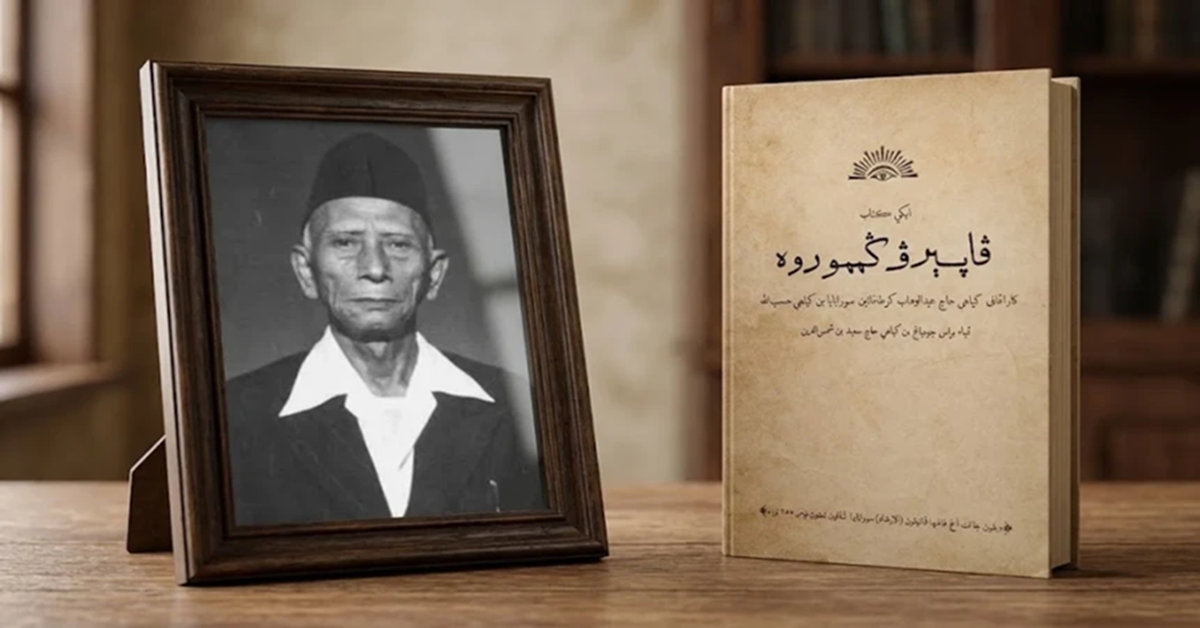
Penyirep Gemuruh: The Flexibility of Islamic Jurisprudence, Scholarly Vision, and the Intellectual Tradition of KH Abdul Wahab Chasbullah
Penyirep Gemuruh is a book written by KH Abdul Wahab Chasbullah in 1343 AH/1924 CE. At first glance, the book discusses issues related to the management committee’s efforts to maintain and develop the Jami’ Peneleh Mosque in Surabaya. However, a closer reading reveals much broader questions, ranging from the mosque’s history and social dynamics to differences of opinion among Islamic scholars, legal reasoning methods, and how a kiai (Islamic scholar) interprets the needs of his time when addressing concrete problems.
Therefore, Penyirep Gemuruh should not be read merely as a book that answers a single legal question. Rather, it offers a portrait of KH Abdul Wahab Chasbullah’s intellectual engagement with real religious issues within society. The question of mosque development ultimately leads readers to a more fundamental inquiry: how does Islamic law operate when confronted with societal needs, traditions, the history of a particular place, and differences of opinion among scholars?
Penyirep Gemuruh can be read as an intellectual document that demonstrates how KH Abdul Wahab Chasbullah brought religious texts into dialogue with social realities. It reveals how the tradition of fiqh (Islamic jurisprudence) responds to concrete societal needs, how scholarly disagreements are managed, and how a scholar positions himself among textual sources, tradition, practical needs, and public welfare.
Contextual Fiqh and the Dialectics of Public Welfare in Penyirep Gemuruh
Much of Penyirep Gemuruh discusses the legal aspects of maintaining and developing a mosque. Maintaining a mosque does not merely mean repairing a damaged building; it also includes expanding it when the existing structure can no longer accommodate the congregation, particularly for Friday prayers.
The issue becomes more complex when a proposed expansion affects an area containing, or situated near, ancient graves. This was the situation at Peneleh Mosque in Surabaya. The proposed expansion gave rise to differing opinions among both congregants and local religious leaders. What initially appeared to be a straightforward matter developed into a fiqh debate involving two competing concerns: the need to expand a house of worship and the obligation to respect the deceased.
The matter was subsequently brought to a deliberation involving several Islamic scholars. Those mentioned in this discussion include Hadlratussyekh KH M. Hasyim Asy’ari, KH Bisri Syansuri, and KH Faqih Maskumambang. Their differing views, particularly the disagreement between KH Hasyim Asy’ari and KH Faqih Maskumambang, illustrate the complexity of the issue.
KH Hasyim allowed room for permissibility by considering hājah (الحاجة), or necessity and need. Meanwhile, KH Faqih emphasized the principle of preserving the dignity of the deceased, which can be expressed through the concept of ḥifẓ al-ḥurmah lil-mayyit (حفظ الحرمة للميت), or safeguarding the dignity of the deceased. Both positions emerged from the Islamic scholarly tradition, yet they placed different emphasis on the factors considered decisive in reaching a legal judgment.
Amid these differing views, KH Abdul Wahab Chasbullah demonstrated an interesting approach to reasoning. He did not view the issue in strictly black-and-white terms. Instead, he considered the concrete needs of the community and the possible consequences of each decision. If the mosque were not expanded despite its insufficient capacity, a greater maḍarrah (المضرّة), or harm, might arise.
This is where fiqh emerges as a discipline directly engaged with everyday life. Religious texts and scholarly opinions remain its foundation, but their application requires the ability to understand circumstances. Fiqh does not stop at asking what the legal ruling is; it moves toward a more contextual question: how can that ruling be applied in real situations while remaining faithful to the principles of Islamic law?
This approach demonstrates that KH Abdul Wahab did not treat differences of opinion as a dead end. Instead, ikhtilāf (scholarly disagreement) became an opportunity for deliberation and the search for solutions. The principles of fiqh and uṣūl al-fiqh (the principles of Islamic jurisprudence) were employed to assess needs, consider circumstances, and evaluate the possible consequences of a decision.
Ahl al-Khibrah and a Way of Thinking Beyond Boundaries
One of the most interesting passages in Penyirep Gemuruh appears when the Ta’mīr al-Masājid (تعمير المساجد) organization, an association connected with mosque management in Surabaya during the 1920s, asked how the status and age of graves around Peneleh Mosque could be determined. This question was important because the age of the graves was relevant to legal considerations concerning the possible reuse of the area.
KH Abdul Wahab explained that the age of a grave could be determined in two ways. First, by consulting ahl al-khibrah (أهل الخبرة), or people with relevant experience and expertise concerning graves. Second, by examining signs found at the burial site, such as gravestones and other indications that could help estimate its age.
The concept of ahl al-khibrah refers to individuals with expertise or experience in a particular field. The underlying principle is significant: when a question concerns factual matters, such as the age and condition of graves, the assessment requires people with relevant knowledge.
The issue became more complicated when some congregants questioned the reliability of information provided by the grave caretaker because he was perceived as someone who did not perform the prescribed prayers. KH Abdul Wahab’s response is particularly noteworthy. His reasoning emphasized that an ahl al-khibrah should be evaluated according to expertise relevant to the question at hand, rather than solely on the basis of other considerations unrelated to that person’s professional competence.
This reasoning can be compared to the medical profession. When consulting a doctor, the primary consideration in accepting a diagnosis is the doctor’s medical knowledge and expertise. Similarly, when a grave caretaker is asked about the age of a burial site, what matters is the caretaker’s knowledge and experience concerning that site.
This distinction highlights the difference between religious authority and specialized expertise. Islamic scholars possess authority in providing legal and religious assessments, while experts in particular fields can supply the factual information needed for decision-making. These two forms of authority need not be placed in opposition. On the contrary, legal decisions can become more accurate when religious considerations are combined with reliable factual information.
This aspect makes Penyirep Gemuruh particularly relevant today. KH Abdul Wahab demonstrated that resolving religious issues may require knowledge beyond fiqh. Religious law remains the normative foundation, but its application requires factual information that can be substantiated.
Among the visionary scholars of their time, KH Abdul Wahab stands as an important example of this intellectual character. Being visionary in this context does not mean abandoning tradition; rather, it means examining problems from a broader perspective while remaining grounded in an established scholarly tradition.
In the early twentieth century, when the relationship between religious and social knowledge was not yet commonly discussed using today’s academic terminology, this kind of reasoning was already evident in KH Abdul Wahab’s intellectual practice. He could identify those qualified to explain a particular fact and then incorporate that information into religious reasoning.
This is what makes KH Abdul Wahab’s thought so relevant: he was not rigid in confronting problems, yet he did not abandon his traditional foundations. He was flexible without becoming permissive, open-minded without sacrificing principles, and adaptive without losing his intellectual roots.
KH Abdul Wahab’s Scholarly Vision and the Genealogy of NU’s Intellectual Tradition
Reading Penyirep Gemuruh ultimately leads to an important realization: KH Abdul Wahab Chasbullah’s intellectual character cannot be separated from the intellectual tradition that later developed within Nahdlatul Ulama (NU). From its beginnings, NU was established not only as a religious organization but also as a space for bringing Islamic traditions into dialogue with social change.
This character can be seen in an approach that is flexible, non-rigid, adaptive, and visionary. Flexibility does not mean abandoning principles, just as adaptation does not mean forsaking tradition. Rather, the ability to adapt emerges from mastery of tradition combined with the capacity to understand context.
Penyirep Gemuruh provides a concrete example. KH Abdul Wahab confronted a distinctly local issue: the expansion of Peneleh Mosque and the presence of ancient graves in its vicinity. Yet his approach to resolving it demonstrated a mode of thinking that extended beyond the immediate local problem. He brought together the congregation’s needs, scholarly opinions, the condition of the graves, information from ahl al-khibrah, and the potential harm that could arise if the community’s needs remained unmet.
Thus, this book does more than provide an answer to a question about mosque development. It also demonstrates a method of reasoning—a method that deserves to be understood and passed on to future generations.
Within NU’s intellectual tradition, the ability to interpret change without losing one’s roots continues to take shape in various contexts. The tradition of baḥth al-masā’il (collective deliberation on religious and legal questions), scholarly consultation, the use of classical Islamic texts known as turāth, and openness to developments in scientific knowledge all demonstrate that fiqh continually engages with changing realities.
KH Abdul Wahab embodied this principle in practical terms. He did not regard tradition as a constraint but as a resource for understanding new problems. Nor did he view change as a threat that must always be rejected; instead, he regarded it as a reality that needed to be understood and guided.
This is where Penyirep Gemuruh becomes relevant to today’s generation of NU. Contemporary challenges are increasingly complex, encompassing technological developments, social change, environmental issues, economics, health, education, and shifting patterns of social relations. Yet the fundamental principle remains the same: new problems require careful examination, while tradition provides a foundation that prevents such examination from losing its direction.
For this reason, KH Abdul Wahab’s legacy should not be remembered solely through the history of NU’s founding or his political and diplomatic contributions. Penyirep Gemuruh reveals another equally important dimension: the intellectual tradition of a scholar capable of bringing text and context, norms and facts, and tradition and change into dialogue.
Ultimately, Penyirep Gemuruh is not merely a story about Peneleh Mosque. It illustrates how a scholar interprets life. From the question of graves and mosque expansion, we discover a portrait of living fiqh, productive deliberation, respect for expertise, and the courage to seek solutions amid scholarly disagreement.
If we wish to understand why NU’s intellectual tradition has endured through changing times, one answer can be found in the thinking of scholars such as KH Abdul Wahab Chasbullah: rooted in tradition but not imprisoned by the past; firm in principle but not rigid in application; capable of adapting while maintaining direction; and able to look toward the future without losing sight of history.
Perhaps this is the true “gemuruh” (resounding voice) that we can hear from Penyirep Gemuruh: the voice of a scholarly tradition teaching us that fiqh is not merely a collection of answers, but a way of understanding life through knowledge, wisdom, flexibility, and forward-looking vision. KH Abdul Wahab’s legacy therefore lies not only in the history of NU’s founding but also in the intellectual approach he passed on.
Author: Muhammad Izzul Islam An Najmi (Lecturer, Faculty of Ushuluddin)
Image Source: NU Online
This article was originally published by NU Online on October 8, 2026, under the title “Penyirep Gemuruh: Keluwesan Fikih, Visi Keulamaan, dan Tradisi Intelektual KH Abdul Wahab Chasbullah.”
Original article: https://www.nu.or.id/pustaka/penyirep-gemuruh-keluwesan-fikih-visi-keulamaan-dan-tradisi-intelektual-kh-abdul-wahab-chasbullah-Uzz6w