In the Spirit of Earth Day, Ushuluddin Discussion Highlights Indigenous Peoples’ Rights
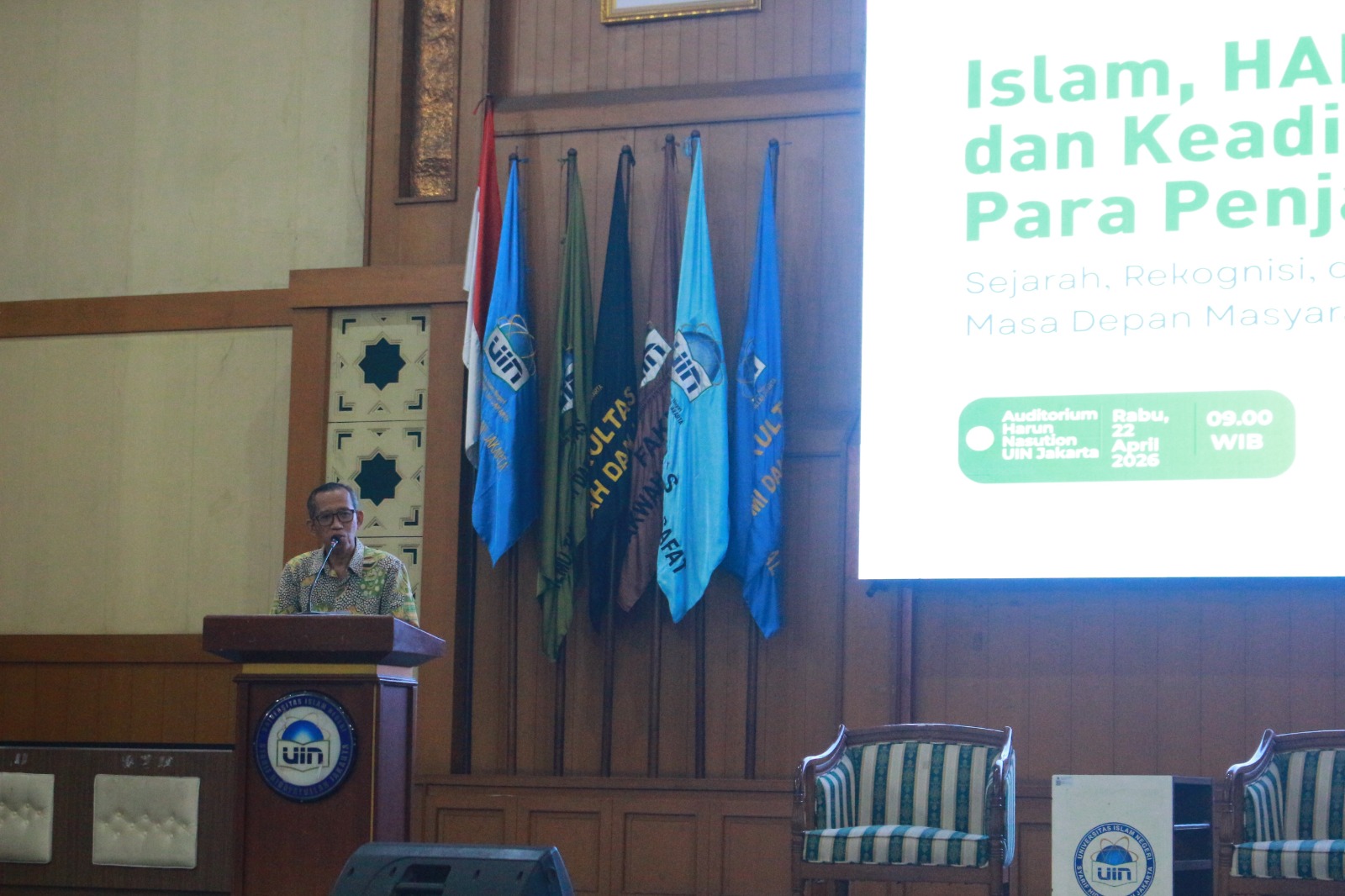
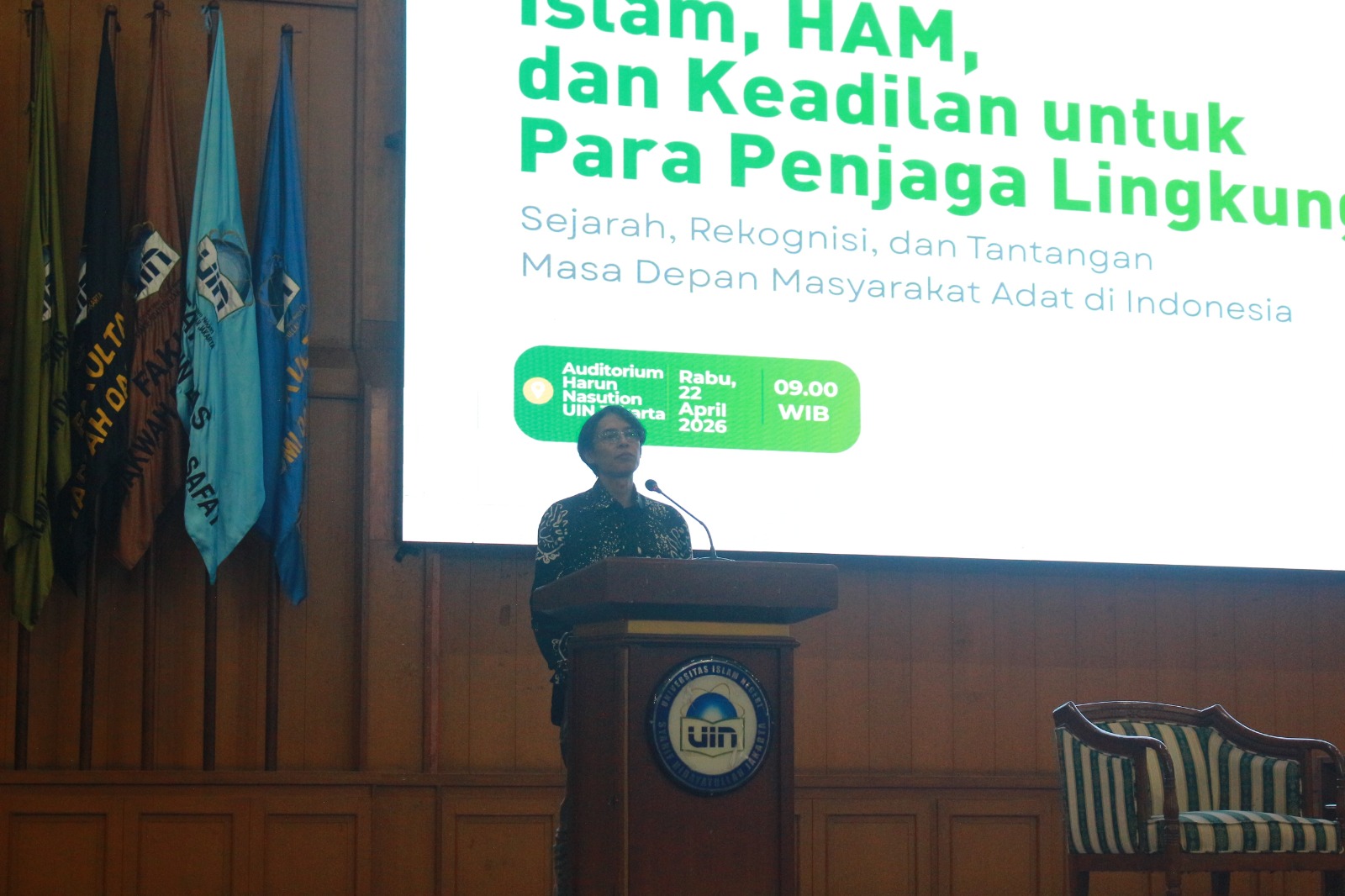
Jakarta, FU Online News – In commemoration of Earth Day on April 22, 2026, a public discussion titled “Islam, Human Rights, and Justice for Environmental Guardians” was successfully held at the Harun Nasution Auditorium, UIN Syarif Hidayatullah Jakarta, on Wednesday (April 22).
The event was a collaboration between the Student Executive Board (DEMA) of the Faculty of Ushuluddin UIN Jakarta, Islami.co, the Ministry of Law and Human Rights, and Kemitraan Partnership.
Carrying the theme “History, Recognition, and Future Challenges of Indigenous Peoples in Indonesia”, the forum discussed various environmental issues closely related to indigenous communities, including shrinking living spaces, land conflicts, and the recognition of customary land rights.
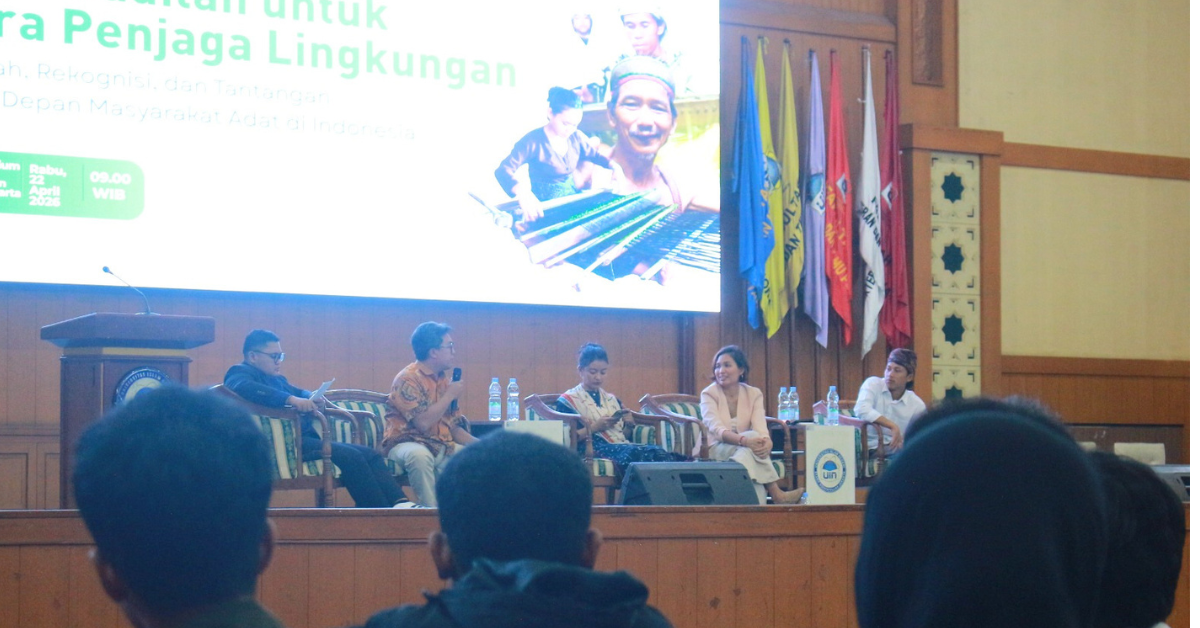
Several speakers from diverse institutions shared their perspectives, including Savic Ali (PBNU and Islami.co), Belgis Habiba (Greenpeace Indonesia), Fathudin (LP2M UIN Jakarta), Tracy Pasaribu (Kemitraan Partnership), and Cecep Sanusi (Kasepuhan Indigenous Community, Lebak, Banten). The discussion was moderated by Boby Almahbub.
The Vice Dean of the Faculty of Ushuluddin for Student Affairs, Alumni, and Cooperation, Dr. Aktobi Ghozali, emphasized that the event was not merely an academic or ceremonial forum, but a reminder that the Earth is a shared home that must be protected. He also noted that the Faculty of Ushuluddin has a strong commitment to environmental issues.
“At the same time, the Faculty of Ushuluddin is also holding a Green Metric FGD for planning a new building,” he added.
In his remarks, Savic Ali expressed hope that the discussion would encourage critical thinking among students regarding national issues. He highlighted that critical thinking is a value repeatedly emphasized in the Qur’an.
Meanwhile, Tracy Pasaribu stressed that indigenous peoples hold a fundamental position in nation-building. She noted that indigenous communities are one of the key elements in the establishment of Indonesia, and therefore their existence and rights must be strongly recognized.
This view was reinforced by Cecep Sanusi, who described the real challenges faced by indigenous communities, such as extractive development pressures, limited participation in decision-making, lack of empowerment programs, and disparities in education and healthcare.
On the other hand, Belgis Habiba expressed concern over the condition of Indonesia’s forests, noting that the reality on the ground often contradicts Indonesia’s image as the “lungs of the world,” due to ongoing environmental degradation.
Meanwhile, Dr. Fathudin emphasized that indigenous communities existed long before the formation of the state. He explained that they possess their own value systems and customary laws, which serve as guidelines for life, making it essential to understand their perspective in addressing justice issues comprehensively.
Participants showed strong enthusiasm through active engagement in the discussion and Q&A session. The forum served not only as a space for exchanging ideas but also as a platform to deepen public understanding of the link between environmental issues and indigenous rights.
Through this discussion, the organizers hope to raise public awareness and foster cross-sector collaboration in protecting the environment and safeguarding the rights of indigenous peoples in Indonesia.
(Alvin/Ishma/FU)