
Green Sufism and Deforestation in Indonesia
Jakarta – Deforestation in Indonesia has often been discussed in the language of numbers: the extent of forest loss, species extinction, and the economic losses that follow. This language is important, but never sufficient.
There is a dimension that is often overlooked—the inner, spiritual dimension of humanity. From the perspective of Green Sufism, forest destruction is not merely a failure of policy or governance, but a spiritual crisis of the nation—a sign of hearts that have dried up amidst an abundance of natural resources.
In the Islamic intellectual tradition, the universe is understood as cosmic signs (ayat kauniyyah), living manifestations of God that speak. Ibn ‘Arabi described nature as the “breath of the Compassionate,” while Ikhwan al-Shafa portrayed it as humanity’s twin sibling.
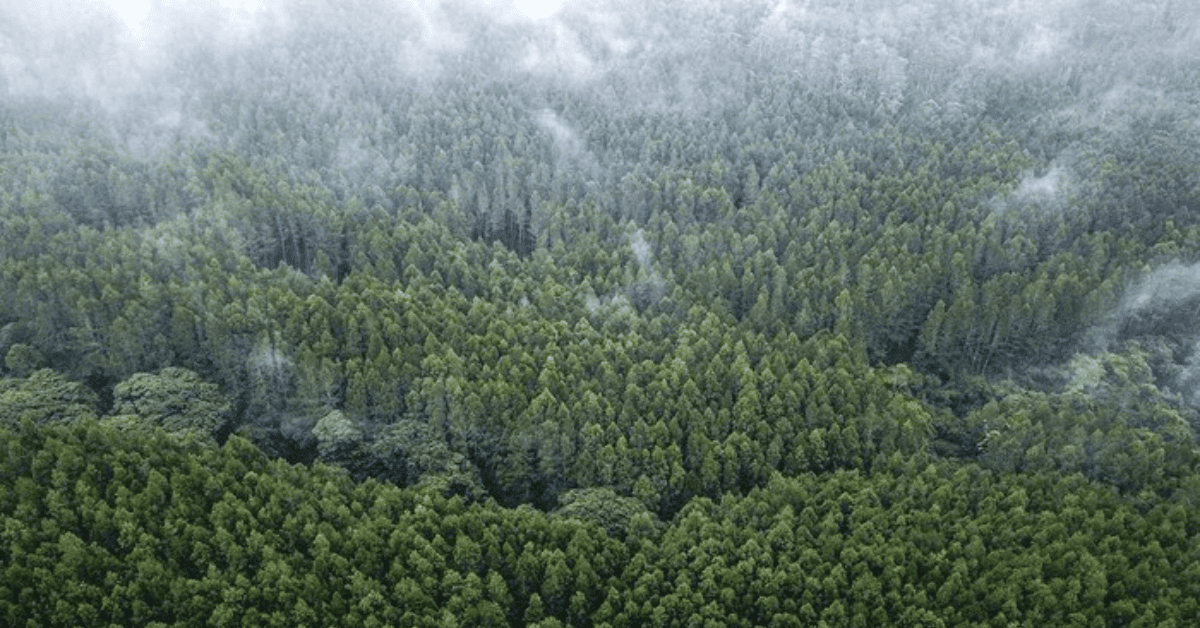
Forests, with their silence and order, are spaces of cosmic remembrance (dhikr). They do not shout, yet they bear witness. They do not demand, yet they sustain life. When forests are cut down greedily, what is severed is not only ecological networks, but also the sacred relationship between humans, God, and the universe.
Indonesia is endowed with forest landscapes that are not only ecologically rich but also spiritually meaningful. The forests of Kalimantan, once called the lungs of the world, are now fragmented by logging and mining. Papua’s rainforests—among the oldest on the planet—hold thousands of endemic species and indigenous cosmologies, yet are increasingly threatened by industrial expansion.
The Leuser Ecosystem in Sumatra—the only habitat where elephants, tigers, rhinos, and orangutans coexist—continues to erode. Likewise, the Bukit Barisan mountain range and the unique forests of Sulawesi are under pressure. In Green Sufism, these forests are not economic assets, but divine trusts (amanah) that demand human humility.
Sufism has long taught that outward destruction stems from inner corruption. Abu Hamid al-Ghazali emphasized tazkiyat al-nafs (purification of the soul) as the foundation of ethics. Undisciplined desires disguise themselves as needs; greed wears the robe of rationality.
In the context of deforestation, this desire appears in narratives of development and economic growth that separate profit from blessing. Nature is reduced to a commodity, rather than a trust.
Sufism also rejects the view of nature as inanimate. For Ibn ‘Arabi, all existence is a network of divine manifestations; every being possesses ontological dignity. Destroying forests means damaging nodes within this network—an ethical and spiritual violation. Jalaluddin Rumi reminds us that nature speaks to hearts willing to listen.
When humans lose the ability to hear nature’s voice, they become not only deaf to the environment, but also to themselves. Silence in the face of massive environmental destruction is a symptom of a sealed heart (qalb)—one no longer sensitive to the signs of God’s presence.
Islam positions humans as khalifah—stewards of the earth, not its absolute owners. Yet large-scale deforestation shows a shift from stewardship to domination, from trust to exploitation.
In Sufi perspective, this shift reflects a failure of cosmic humility (tawadhu’), a loss of awareness that humans are but a small part of a vast web of life. The consequences are real and costly: floods, landslides, haze, and water crises are not merely natural disasters, but ecological responses to broken relationships.
Green Sufism emerges not as spiritual romanticism, but as an ethical and practical framework. It views nature as a manifestation of divine love (mahabbah) and connects inner purification with public policy. At least five main pillars of Green Sufism are relevant to the Indonesian context.
First, ecological tazkiyat al-nafs—inner education to cultivate contentment (qana’ah) and restrain exploitative desires. Second, cosmic humility in governance, requiring forest policies grounded in respect for ecological limits, recognition of indigenous rights, and fair law enforcement.
Third, ecological worship—caring for forests as an act of devotion; reforestation and rehabilitation become collective remembrance. Fourth, strengthening spiritual local wisdom that has preserved forests for centuries through sacred cosmologies. Fifth, a Sufi-inspired economy that prioritizes blessing over short-term profit.
Sufism always offers a path of return. Repentance in Green Sufism is ecological repentance—a conscious effort to repair broken relationships with the earth. It requires a shift from domination to stewardship, from taking to nurturing.
Indonesia possesses great spiritual and ecological capital to lead this narrative, but it will be meaningless without ethical courage. Policy without inner awareness is fragile; technology without ethics is harmful; growth without meaning is empty.
Ultimately, a restored forest requires hearts that are first restored. When hearts return to reverence for God, compassion for creation, and humility before the universe, protecting forests no longer feels like a burden. It becomes a living prayer and an active peace. Green Sufism does not offer instant solutions, but provides a path back to balance. There, the silent remembrance of trees can once again be heard—faithful, enduring, and awakening us to the realization that forests are cosmic scriptures, meant not only to be preserved, but also to be read and cared for.
Author: Bambang Irawan (Professor, Faculty of Ushuluddin)
Image Source: Antara Foto/Raisan Al Farisi
This article has been published on detiknews under the title:
"Green Sufisme dan Deforestasi di Indonesia" https://news.detik.com/kolom/d-8320844/green-sufisme-dan-deforestasi-di-indonesia.