
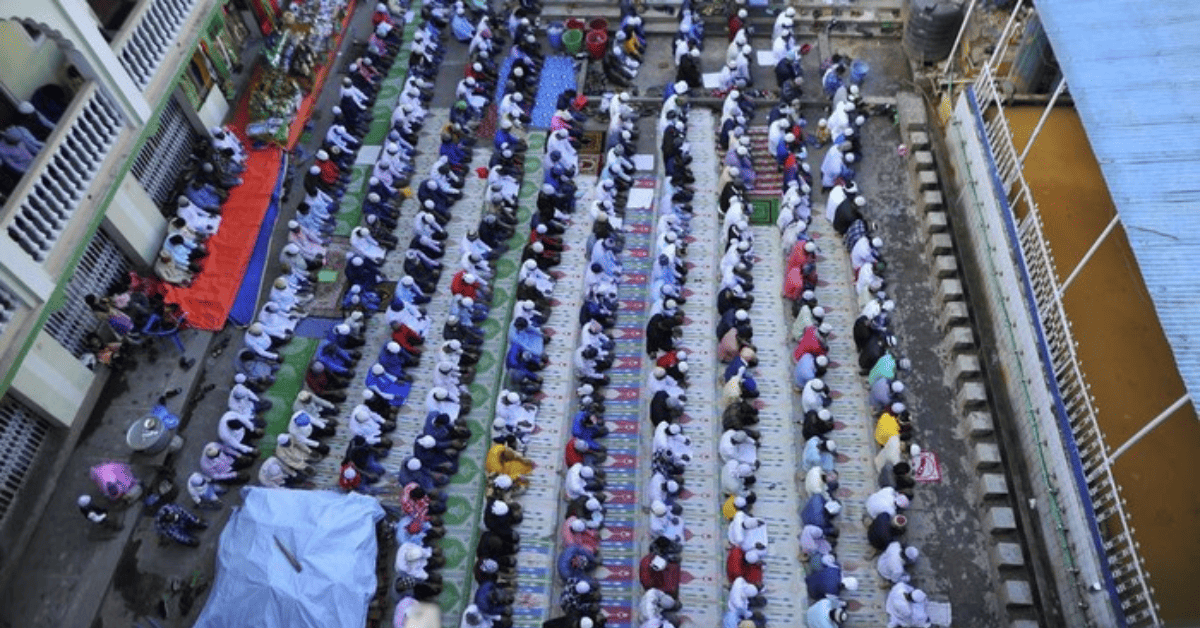
Eid al-Adha and the Meaning of Sacrifice
The 10th of Dhu al-Hijjah 1447 AH, or Eid al-Adha, falls on Wednesday, May 27, 2026. This was announced by Indonesia’s Minister of Religious Affairs, Nasaruddin Umar, during the Isbat Session held on Sunday (May 17, 2026) at the H.M. Rasjidi Auditorium, Ministry of Religious Affairs Building, MH Thamrin Street, Jakarta.
The announcement is certainly important as a marker in the religious calendar. However, Eid al-Adha is not merely about a public holiday, the chanting of takbir, the slaughtering of sacrificial animals, or the return of pilgrims from the Holy Land. Behind it lies a much deeper calling: a call to reexamine our willingness to make sacrifices, especially for our families and our nation.
Amid an increasingly complex and noisy life, the family is often the first place to feel the impact of many challenges. The prices of basic necessities continue to rise, employment is not always secure, children grow up under pressure, and parents often carry burdens they never have the chance to share. Many houses are still standing, yet meaningful conversations within them have become increasingly rare. Many families appear fine from the outside, while inside they endure long periods of silence.
This is where the pilgrimage (Hajj) and Eid al-Adha become deeply relevant to everyday life. Hajj is not merely a journey to Makkah; it is also a journey of self-discipline and humility. Before the Kaaba, people learn that titles, positions, wealth, and prestigious clothing do not determine true honor. Everyone wears the same ihram. Everyone stands equally as a servant of God. No one has the right to consider themselves superior before Allah.
This lesson becomes even more profound when we reflect upon the family of Prophet Ibrahim (Abraham). There was Prophet Ibrahim, tested through obedience; Hajar (Hagar), tested through loneliness; and Ismail (Ishmael), tested through submission. They are not merely figures in a sacred story. They serve as mirrors for every family striving to preserve faith, love, and hope.
Hajar once found herself in a barren valley with her child. There were no visible guarantees, no crowds, and no comfort. Yet she did not surrender to despair. She ran between Safa and Marwah, searching for water, seeking a solution, and looking for signs that life was still worth striving for. It was from the efforts of a worried yet resilient mother that the spring of Zamzam emerged.
Many Indonesian families today are, in their own way, performing their own sa’i. There are fathers who leave home before dawn to ensure that food remains on the table. There are mothers who conceal their exhaustion so their children may continue to feel secure. There are young people trying to appear strong even when the future seems uncertain. There are families that endure not because they are free from problems, but because they continue to hold on to one another.
Therefore, sacrifice does not always have to appear grand. Sometimes sacrifice means restraining harsh words when emotions are high. Sometimes it means returning home earlier so that a child does not grow up feeling alone. Sometimes it means apologizing first, even when one does not feel entirely at fault. Sometimes it means living simply so that a family is not destroyed by pride and social prestige.
Eid al-Adha reminds us that a strong family is not one that never sheds tears. Rather, it is a family that refuses to let tears become a reason to abandon one another. A blessed home is not one free from trials, but one that transforms trials into opportunities to draw closer to Allah and become kinder to each member of the family.
Yet the message of sacrifice does not stop at the doorstep of the home. It also resonates throughout the history of a nation. Indonesia was not born out of comfort. Independence was not given as a gift. It was achieved through the struggles of people willing to sacrifice wealth, status, freedom, and even their lives.
During the Dutch colonial period, many national figures demonstrated the true meaning of sacrifice. Haji Samanhudi, through merchant movements and economic empowerment, helped foster the awareness that an oppressed people should never remain submissive forever. Haji Oemar Said Tjokroaminoto inspired the spirit of independence, educated future generations, and transformed organizations into platforms of political courage.
KH Ahmad Dahlan pioneered reform through education, social services, and a form of da’wah that upheld human dignity. KH Hasyim Asy’ari strengthened the role of pesantren, scholars, and students in safeguarding both religion and homeland.
They, along with countless other national figures, did not live merely for themselves. Some were monitored, restricted, slandered, imprisoned, and threatened because of their convictions. Others chose difficult and lonely paths because their beliefs were considered a threat to colonial power. They understood that love for one’s homeland comes at a price. They did not merely speak about sacrifice—they lived it.
From these predecessors, we learn that sacrifice is not limited to slaughtering an animal during Eid al-Adha. Sacrifice also means cutting away the greed within ourselves.
It means cutting off narrow self-interest. It means overcoming the fear that keeps us silent in the face of injustice. It means sacrificing the ego that turns families, citizens, and the nation into victims of personal ambition.
This lesson is particularly relevant to our public life today. Politics should be a path of service, not a means of sacrificing the people for personal gain. Public office should be a trust, not a privilege used to elevate oneself above others. A leader should learn from the spirit of ihram: the higher one’s position, the greater one’s obligation to remain humble.
This nation does not lack intelligent people. What we often long for are people who have the courage to remain honest when dishonesty appears more rewarding. We do not lack speeches; what we miss are genuine examples. We do not lack programs; what is often absent is a sincere commitment that reaches ordinary people—their kitchens, their children’s schools, hospital wards, and the modest homes whose voices are seldom heard.
A mabrur (accepted) Hajj does not produce spiritual arrogance. Rather, it nurtures individuals who are more willing to apologize, more eager to help others, more fearful of committing injustice, and more ashamed of taking what does not rightfully belong to them. If someone returns from the Holy Land yet continues to demean others, deceive people, flaunt power, or ignore the suffering of fellow human beings, perhaps their body has reached Makkah, but their soul has not fully returned to God.
The same applies to Eid al-Adha. This sacred celebration should inspire us to ask ourselves honestly: What have we sacrificed for our families? What have we sacrificed for the less fortunate around us? What have we sacrificed for our nation? Perhaps, all too often, we have expected others to make sacrifices for our own comfort.
Amid the pressures of modern life, simplicity becomes an important lesson. Simplicity does not mean surrendering to poverty. It means having the courage to manage our desires. Sincerity is not weakness. Rather, it is the inner strength that enables us to keep giving even when our hearts are weary. Sacrifice is not defeat; it is humanity’s victory over its own ego.
For this reason, the renewal of our nation should begin from the place closest to us: the family. Restore the way fathers speak to their children. Restore the way husbands honor their wives. Restore the way children respect their parents. Restore the dining table as a place for meaningful conversation, not merely a place to satisfy hunger. Restore the home as a place of belonging, not an arena of blame and accusation.
From sincere families will emerge a more civilized society. From a civilized society will grow a more ethical political culture. From ethical politics will arise a more humane economy. And from a humane economy, this nation will become strong not only in numbers and statistics, but also in spirit and character.
This year’s Eid al-Adha comes as both a gentle and powerful reminder. It invites us to return to Allah, to return to our families, to return to honesty, and to return to a more civilized Indonesia. It calls us to learn from Ibrahim, Hajar, and Ismail, as well as from the heroes who were willing to pay a high price for their love of the homeland.
In the end, this nation will not be saved merely by those who are skilled in speaking. It will be saved by those who are still capable of sincere sacrifice: fathers who restrain their ego for the sake of their families, mothers who quietly nurture hope, young people who refuse to surrender to cynicism, leaders who fear Allah more than they fear losing their positions, and citizens who continue to uphold good character even when life is difficult.
Amid all the exhaustion of our times, the Zamzam we need is a spring of sincerity flowing from Indonesian families, gradually yet surely becoming a source of strength for the nation.
Author: Prof. Dr. Bambang Irawan
Professor, Faculty of Ushuluddin, UIN Jakarta
Image Source: NurPhoto via Getty Images/NurPhoto
This article was originally published on Detik.com on May 24, 2026, under the title “Eid al-Adha and the Meaning of Sacrifice.” https://news.detik.com/kolom/d-8502182/idul-adha-dan-makna-pengorbanan