
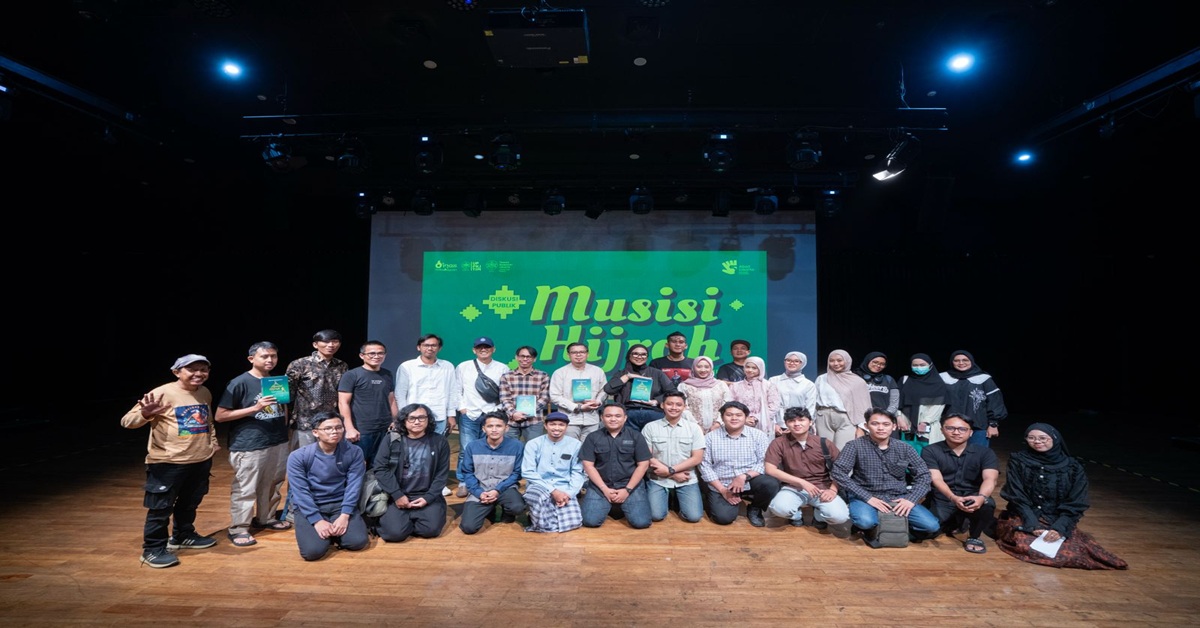
Dr. Rahmat Hidayatullah, M.A., Explores the Phenomenon of Musicians Embracing Hijrah at a DKJ Public Discussion
Jakarta, Dosen Update — Dr. Rahmat Hidayatullah, M.A., a lecturer at the Faculty of Ushuluddin, UIN Syarif Hidayatullah Jakarta, discussed the phenomenon of Indonesian musicians embracing hijrah through a public discussion and book review of Musisi Hijrah: Kebangkitan Islamisme Kultural di Indonesia (Musicians Embracing Hijrah: The Rise of Cultural Islamism in Indonesia). Organized by the Jakarta Arts Council (Dewan Kesenian Jakarta/DKJ), the event took place at the Wahyu Sihombing Theatre, Taman Ismail Marzuki, Jakarta, on October 14, 2026.
The discussion provided a platform for exchanging ideas on the relationship between music, religious identity, popular culture, and socio-religious movements in contemporary Indonesia. Through a discussion of his book, Rahmat invited participants to view hijrah not merely as a change in lifestyle or individual religious practice, but also as part of broader social and cultural dynamics.
Published by LP3ES in October 2025, the book examines the phenomenon of hijrah among musicians from various genres, including rock, metal, punk, hip-hop, and pop. It situates these musicians’ experiences within the context of the rise of cultural Islamism and the development of popular culture in Indonesia.
In his presentation, Rahmat drew on the life experiences of nine musicians to explore changes in their religious orientations and involvement in various Islamist movements. The musicians examined include Irfan Sembiring of Rotor, Derry Sulaiman of Betrayer, Sakti Ari Seno of Sheila On 7, M. Hariadi Nasution of Tengkorak, Aditya Rahman Yani of The Fourty’s Accident, Thufail Al Ghifari, Reda Samudera of Speaker First, M. Kautsar Hikmat of NOAH, and Ahmad Zarkasy of Purgatory.
Using ethnographic and interpretive biographical approaches, the book traces the musicians’ journeys of changing religious orientations, including experiences of existential crises, involvement in religious networks, and the emergence of some musicians as religious reference figures among young Muslims.
The study also explores how experiences of hijrah, which begin as individual journeys, can develop into collective action through community networks, da'wah subcultures, and digital media. Thus, the phenomenon of musicians embracing hijrah is not only related to changes in personal life, but also to identity formation, social relationships, and the dissemination of religious ideas in the public sphere.
The public discussion featured three commentators from different academic backgrounds: Ihsan Ali-Fauzi, Ph.D., founder and director of the Center for the Study of Religion and Democracy (PUSAD) at Paramadina; Wahyudi Akmaliyah, Ph.D., a researcher at the National Research and Innovation Agency (BRIN); and Dr. Roosalina Wulandari, M.Psi., a lecturer in the Department of Psychology, Faculty of Humanities, Bina Nusantara University. The discussion was moderated by Dr. Hilmy Firdausy, M.A., a lecturer at UIN Syarif Hidayatullah Jakarta.
The interdisciplinary perspectives presented at the forum enriched the discussion of musicians embracing hijrah, particularly in relation to the study of religion and democracy, social movements, popular culture, and psychology. The conversation also addressed changes in religious identity, the emergence of new forms of religious authority, post-Reformasi identity politics, and the role of digital media in the development of religious movements.
During the response session, Rahmat expressed his appreciation for the various critiques and suggestions offered regarding the ideas presented in his book. He regarded criticism as an essential part of a healthy academic tradition, enabling a scholarly work to be evaluated, refined, and further developed through subsequent research.
According to Rahmat, scholarly works should not be treated as completed bodies of thought that are closed to correction. Rather, the advancement of knowledge requires openness to differing perspectives, the testing of arguments, and a willingness to continue learning. Academic dialogue of this kind plays an important role in enriching studies of the relationship between music, religion, and contemporary Indonesian society.
Rahmat Hidayatullah’s participation in the public discussion demonstrates the contribution of Faculty of Ushuluddin lecturers to broadening academic discourse in the public sphere, particularly on religious phenomena, popular culture, and social change in Indonesia. Through research and scholarly publications, studies of musicians embracing hijrah are expected to offer deeper insights into the relationship between religious identity, music communities, and the development of digital media.
The book Musisi Hijrah: Kebangkitan Islamisme Kultural di Indonesia was published by LP3ES in October 2025 and developed from Rahmat Hidayatullah’s doctoral dissertation in the Islamic Studies Doctoral Program at the Graduate School of UIN Syarif Hidayatullah Jakarta.
Source: Banten Ekspres, October 16, 2026.
This article was adapted by the Faculty of Ushuluddin Public Relations Office (Humas FU) based on the publication by Banten Ekspres.
Original news article: https://www.bantenekspres.co.id/2026/10/16/dkj-gelar-bedah-buku-musisi-hijrah-bahas-persinggungan-musik-identitas-keagamaan-dan-islamisme-kultural-di-indonesia/