
Chilling Effect: Sa'id ibn al-Musayyib and the Recurrence of Threats Against Activists
The public sphere in Indonesia is increasingly overshadowed by a troubling trend of shrinking freedom of expression.
Activists, academics, and content creators who voice criticism of public policies often become targets of terror.
Names such as DJ Donny, Sheryl Annavita, and Greenpeace activist Iqbal Damanik have reportedly been subjected to intimidation by unknown individuals.
The forms of threats are becoming increasingly uniform, ranging from vandalism in private spaces to the delivery of animal carcasses as explicit messages of intimidation.
Not stopping there, activist Chiki Fawzi has also reportedly experienced aggressive digital terror, including the sending of pig head images via social media and massive character assassination attempts.
These attacks are strongly suspected to be closely related to the criticisms they have expressed on sensitive social issues, including disaster management and environmental policies.
This pattern of intimidation is no longer confined to transparent legal channels, but instead manifests through attacks that are difficult to trace directly to perpetrators.
This situation creates what is known as a chilling effect, a psychological condition in which people begin to censor themselves due to fear for their personal and family safety.
However, if we look at the history of Islamic civilization, intimidation against critical individuals is not a new phenomenon. It has existed since the early period of Islam, when great scholars had to confront absolute power in order to uphold the integrity of knowledge and justice.
One of the most prominent figures symbolizing steadfastness in the face of political pressure is Sa'id ibn al-Musayyib, a key figure among the Tabi'in in Medina.
His life is authoritatively documented in classical works such as Siyar A'lam al-Nubala by Imam al-Dhahabi and At-Tabaqat al-Kubra by Ibn Sa'd.
Historical records describe him as a scholar with deep mastery of religious law and strong economic independence.
He refused to depend on state allowances or gifts from Umayyad rulers.
Born during the time of Umar, he chose to work as an olive oil trader to support himself.
This financial independence granted him the moral freedom to remain critical of government policies without feeling indebted to the ruling authority.
The peak of his confrontation with political authority occurred during the reign of Caliph Abdul Malik ibn Marwan.
At that time, the ruler ordered the people of Medina to pledge allegiance to his two sons, Al-Walid and Sulaiman, as heirs.
This policy aimed to secure the continuity of the Marwan family’s rule.
However, Sa'id ibn al-Musayyib openly refused. As recorded by al-Dhahabi, he firmly declared:
“I will not pledge allegiance to two persons at once until I can no longer distinguish between day and night.”
This refusal was considered a serious act of political defiance by the governor of Medina, Hisham ibn Isma'il.
As a consequence, Sa'id endured severe physical and social punishment. He was publicly flogged sixty times.
The punishment was intended to break his spirit and serve as a warning to others.
He was also subjected to character assassination—dressed in coarse wool garments (a symbol of disgrace) and paraded through the city.
Additionally, he faced strict social isolation, with authorities prohibiting people from attending his teachings or even speaking to him.
Ibn Sa'd narrates that anyone who violated this order would face similar punishment.
Yet remarkably, Sa'id showed no fear or regret.
While being paraded after the flogging, he remained calm and regarded the suffering as a test of faith. He said:
“Do not look favorably upon the supporters of oppressors, except with rejection in your hearts, lest your good deeds be nullified.”
His steadfastness turned the regime’s attempt to disgrace him into a source of greater respect among the people.
Even when the ruler attempted a softer approach—offering to marry his son to Sa'id’s daughter—he refused.
Instead, he married his daughter to a relative with a modest dowry, preserving his family’s integrity from political compromise.
Sa'id ibn al-Musayyib set a moral standard in Islamic intellectual ethics: truth must not be compromised by fear of authority or material temptation.
He understood that when scholars submit to pressure, the social control over power collapses.
Despite isolation, he continued teaching, proving that dedication to knowledge transcends political constraints.
His experience mirrors what activists and academics in Indonesia face today.
Intimidation, threats, character attacks, and digital isolation are classic tools used by those in power when unable to counter truth through reasoned dialogue.
History ultimately remembers not the perpetrators, but figures like Sa'id ibn al-Musayyib as moral exemplars.
His story reminds us that critical voices today are part of a long human struggle against injustice.
Acts of terror are, in essence, implicit acknowledgments of the strength of the truth being spoken.
As with Sa'id ibn al-Musayyib, the integrity of those who defend justice will always outlast the power of those who attempt to silence them.
Author: M Alvin Nur Choironi (Lecturer, Faculty of Ushuluddin)
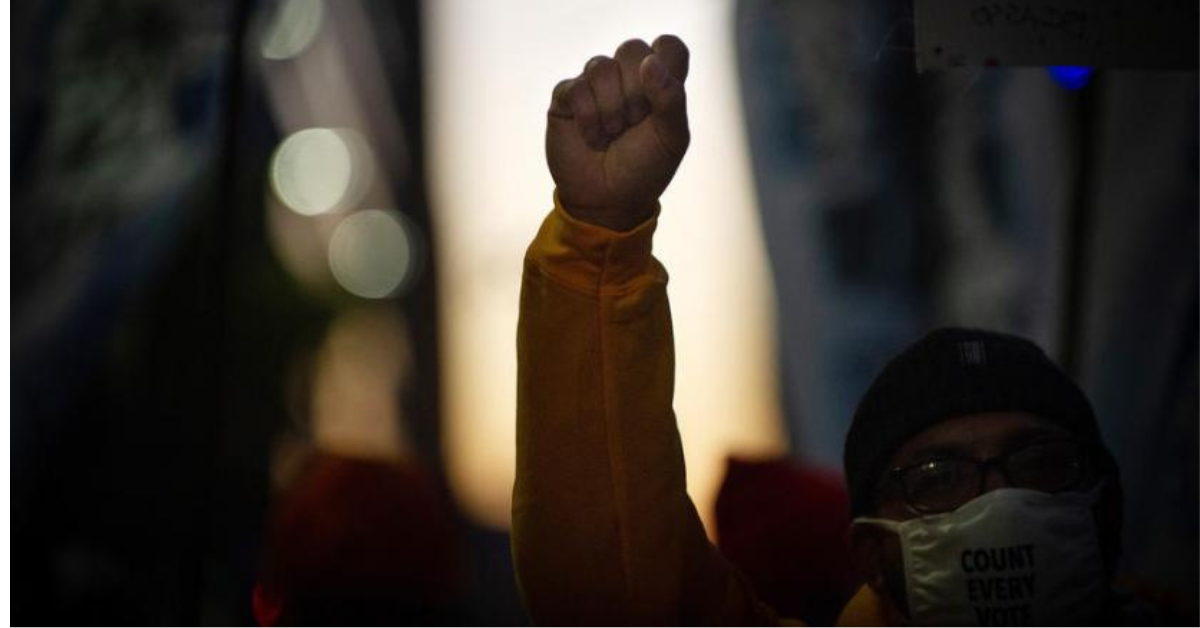
Image Source: EPA
This article has been published on Republika.co.id under the title: "Chilling Effect: Said bin al-Musayyib dan Terulangnya Ancaman kepada Aktivis" https://khazanah.republika.co.id/berita/t8qc9j320/chilling-effect-said-bin-almusayyib-dan-terulangnya-ancaman-kepada-aktivis-part6